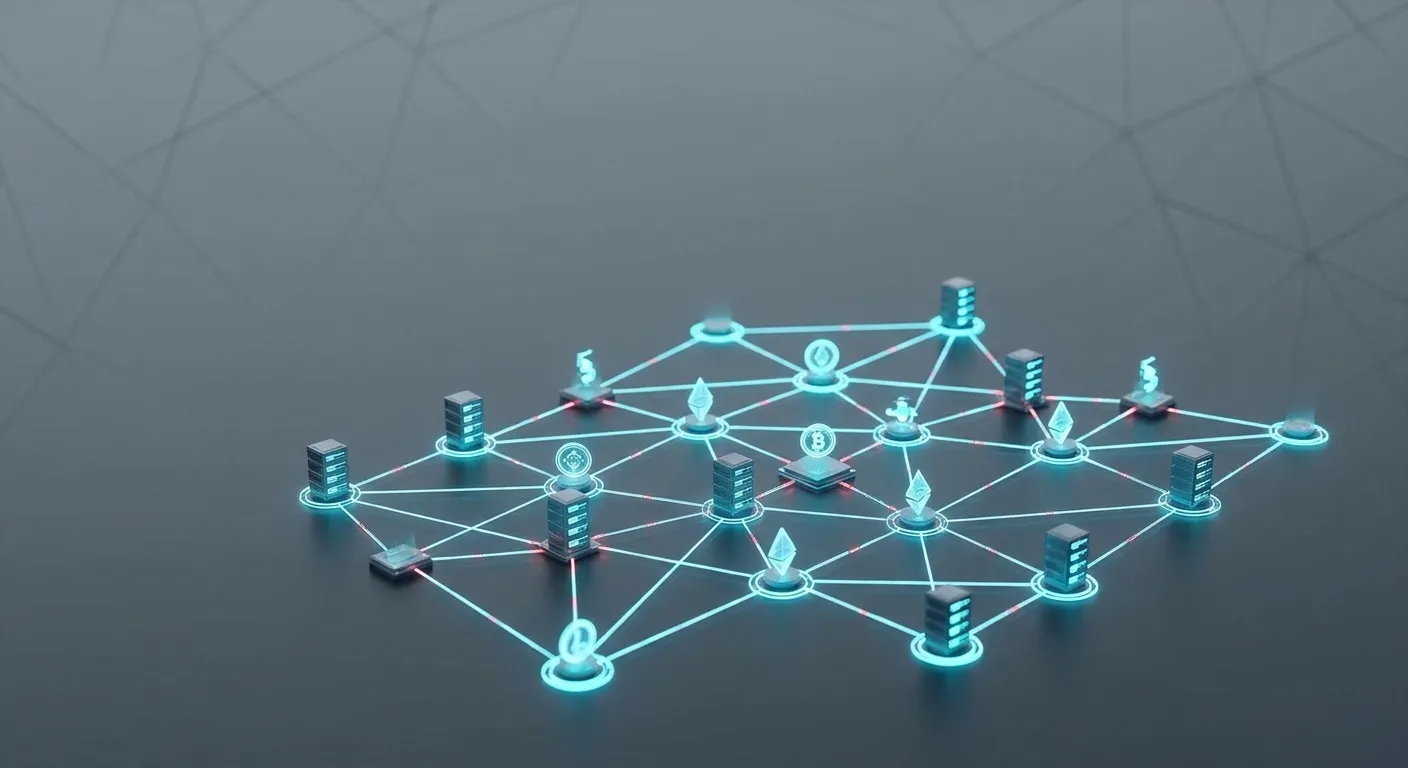
The convergence of artificial intelligence and blockchain technology is creating a new paradigm: decentralized AI networks. These systems are poised to reshape how we interact with digital assets and information. They promise a future where AI is not only intelligent but also transparent, secure, and resistant to censorship. As Web3 continues to evolve, the integration of distributed AI systems becomes increasingly critical, laying the groundwork for truly autonomous and user-centric digital environments.
The Core Concept of Decentralized AI Networks
Unlike traditional centralized AI models, which are controlled by single entities and run on proprietary servers, decentralized AI networks distribute their computational power and data processing across a blockchain or a network of peer-to-peer nodes. This architectural shift addresses several fundamental concerns. These include data privacy, algorithmic bias, and single points of failure. Furthermore, this distribution enhances overall system resilience.
Why Decentralization Matters for AI
Decentralization brings inherent advantages to AI development and deployment. By moving AI computations onto a distributed ledger, trust is no longer placed in a single corporation. Instead, it resides in the cryptographic security of the blockchain. This fosters transparency, as the logic and execution of AI models can be auditable. Moreover, it enhances censorship resistance, making it difficult for any single party to manipulate or shut down an AI system. For users, it means greater data ownership and control, aligning perfectly with the ethos of Web3.
AI-Driven Smart Contracts and Autonomous Agents
One of the most compelling integrations involves AI-driven smart contracts. Current smart contracts are deterministic, executing predefined rules. However, integrating AI capabilities allows smart contracts to become adaptive. They can learn from real-time data and make more nuanced decisions. Imagine a smart contract that dynamically adjusts collateral requirements based on market volatility predicted by an AI model. Alternatively, consider an autonomous agent that manages a DeFi liquidity pool, optimizing returns through machine learning algorithms.
These advanced smart contracts can form the backbone of more sophisticated autonomous agents. These agents could operate across various Web3 protocols. They might execute complex tasks, manage digital identities, and even participate in decentralized autonomous organizations (DAOs) with enhanced decision-making capabilities, driven by open source AI networks.
Web3 and the AI Synergy
Web3 envisions an internet where users own their data and control their digital experiences. The synergy with AI is profound. Decentralized AI networks can power a new generation of Web3 applications. These range from personalized content delivery systems that respect user privacy to sophisticated DeFi protocols that offer adaptive risk management. This integration facilitates the creation of truly user-centric platforms where AI serves the individual, rather than centralized corporations.
In fact, this synergy is already taking shape. Projects are emerging that leverage distributed computing for AI model training. This allows global participation and resource sharing. Consequently, the development of more robust and unbiased AI becomes possible. This collaborative approach aligns with Web3’s principles of openness and community governance.
Challenges and Opportunities for Decentralized AI Networks
Despite their immense potential, decentralized AI networks face several challenges. Scalability is a primary concern. Processing complex AI computations on a blockchain can be resource-intensive and slow. Additionally, ensuring data privacy while maintaining transparency requires innovative cryptographic solutions. Balancing these elements is crucial for widespread adoption. Furthermore, the development of robust governance models for these decentralized systems is ongoing.
However, these challenges also present significant opportunities. Research into more efficient consensus mechanisms and ZK-proofs is accelerating. These advancements could unlock new levels of performance for decentralized AI. Moreover, the open-source nature of many decentralized AI projects encourages global collaboration. This fosters rapid innovation and problem-solving. TrueCryptoNews believes these developments will pave the way for a more equitable and powerful AI future.
Impact on Data Privacy and Security
Data privacy is a paramount concern in the digital age. Centralized AI systems often aggregate vast amounts of personal data, creating honeypots for malicious actors and raising ethical questions about data ownership. Decentralized AI networks offer a powerful alternative. By processing data on-chain or through secure multi-party computation, individual data points remain private. Only aggregated, anonymized insights are shared.
Furthermore, the inherent security features of blockchain technology, such as immutability and cryptographic hashing, make decentralized AI systems more resistant to tampering and cyberattacks. This enhanced security is vital for applications in sensitive sectors like healthcare and finance. It provides a robust framework for protecting valuable information from unauthorized access or manipulation. Ultimately, this approach builds greater user trust in AI applications.
The Role of Decentralized Computing in AI Training
Training advanced AI models requires substantial computational resources. Traditionally, this has been the domain of large corporations with access to massive data centers. Decentralized computing platforms are changing this landscape. They allow individuals and smaller organizations to contribute their idle computing power to train AI models. In return, they receive cryptocurrency rewards.
This democratizes AI development. It reduces entry barriers and fosters a more diverse ecosystem of contributors. Moreover, it can lead to more resilient and less biased AI models. This is because training data and computational resources come from a wider, more varied pool. Consequently, the power to shape future AI is distributed, rather than concentrated in a few hands. This is a significant step forward for decentralized AI networks.
Future Applications and the Evolution of Web3
The implications of robust decentralized AI networks for the future of Web3 are vast. We can anticipate the emergence of self-governing digital economies where AI agents manage resources and execute transactions autonomously. Imagine decentralized autonomous organizations (DAOs) powered by AI that can adapt their strategies based on real-time market conditions. Furthermore, consider personalized AI assistants that operate entirely on behalf of the user, free from corporate oversight.
These innovations will extend beyond finance and governance. They will impact areas like content creation, scientific research, and supply chain management. For instance, AI could autonomously verify the authenticity of digital content on a decentralized social media platform. Similarly, AI could optimize resource allocation in a decentralized energy grid. The potential for decentralized AI networks to drive innovation across all sectors is immense. The evolution of Web3 will undoubtedly be intertwined with these advancements.
Building Trust and Transparency in AI
One of the biggest hurdles for AI adoption has been the lack of trust. Users often do not understand how AI models make decisions, leading to skepticism and fear. Decentralized AI networks address this head-on. By building AI on transparent, auditable blockchains, the decision-making process can be scrutinized. This visibility helps to identify and mitigate biases, ensuring fairness.
Moreover, the open-source nature prevalent in many decentralized AI projects fosters community review and improvement. This collaborative approach enhances the reliability and trustworthiness of AI systems. When algorithms are open for inspection, stakeholders can verify their integrity. This is a fundamental shift from proprietary, black-box AI models. Truly, building trust is essential for the widespread acceptance of decentralized AI networks.
The Economic Impact of Decentralized AI
The economic ramifications of decentralized AI are profound. By democratizing access to AI development and computational resources, these networks can foster new economic models. Developers and researchers can collaborate on complex AI projects without needing massive upfront investments. This creates opportunities for smaller teams and individual innovators.
Furthermore, tokenized incentives often drive participation in decentralized AI networks. This allows contributors of data, computing power, or algorithmic improvements to earn rewards. This new economic paradigm can lead to more equitable distribution of wealth generated by AI. It also incentivizes contributions to public goods AI. Therefore, the economic landscape of AI is set for a significant transformation, propelled by these distributed systems. This will undoubtedly impact global markets and innovation.
Conclusion
The integration of AI and blockchain is not merely a technological trend; it is a foundational shift. Decentralized AI networks are poised to redefine how we build, deploy, and interact with artificial intelligence. They offer a compelling vision of an AI future that is secure, transparent, and user-centric. As Web3 continues its expansion, these distributed AI systems will be instrumental in shaping its next digital frontier. The journey to a truly decentralized and intelligent internet has just begun. These innovative systems will undoubtedly play a crucial role in its realization.
TrueCryptoNews will continue to monitor the exciting developments in this space. We believe that understanding these shifts is key for any investor or enthusiast in the digital asset landscape. The future of AI is undeniably decentralized, and its impact will resonate across all aspects of our digital lives. The potential of decentralized AI networks is only just beginning to be explored.
FAQ
What are distributed artificial intelligence systems?
Distributed artificial intelligence systems are AI models and processes that operate across a network of interconnected nodes, rather than relying on a single central server. This architecture enhances resilience, transparency, and resistance to censorship, aligning with Web3 principles.
How do blockchain and AI work together?
Blockchain provides a secure, transparent, and immutable ledger for AI operations, data, and governance. AI, in turn, can enhance smart contracts, automate decisions in DAOs, and provide intelligent analytics within blockchain networks. This synergy creates powerful, autonomous systems.
What are the benefits of open-source AI models?
Open-source AI models foster transparency, allowing anyone to inspect and verify their code and logic. This helps reduce bias, improve security through community audits, and accelerate innovation by enabling collaborative development and iteration.
Can AI improve data security in Web3?
Yes, AI can significantly improve data security in Web3. By leveraging machine learning for anomaly detection, predictive security analytics, and intelligent threat response, AI can bolster the defenses of decentralized platforms against various cyber threats.
What role do autonomous agents play in the future internet?
Autonomous agents, especially those powered by advanced AI and operating on decentralized networks, will perform complex tasks independently across Web3. They will manage digital assets, execute smart contracts, and participate in decentralized governance, creating a more automated and intelligent internet experience.
Explore more: More from TrueCryptoNews