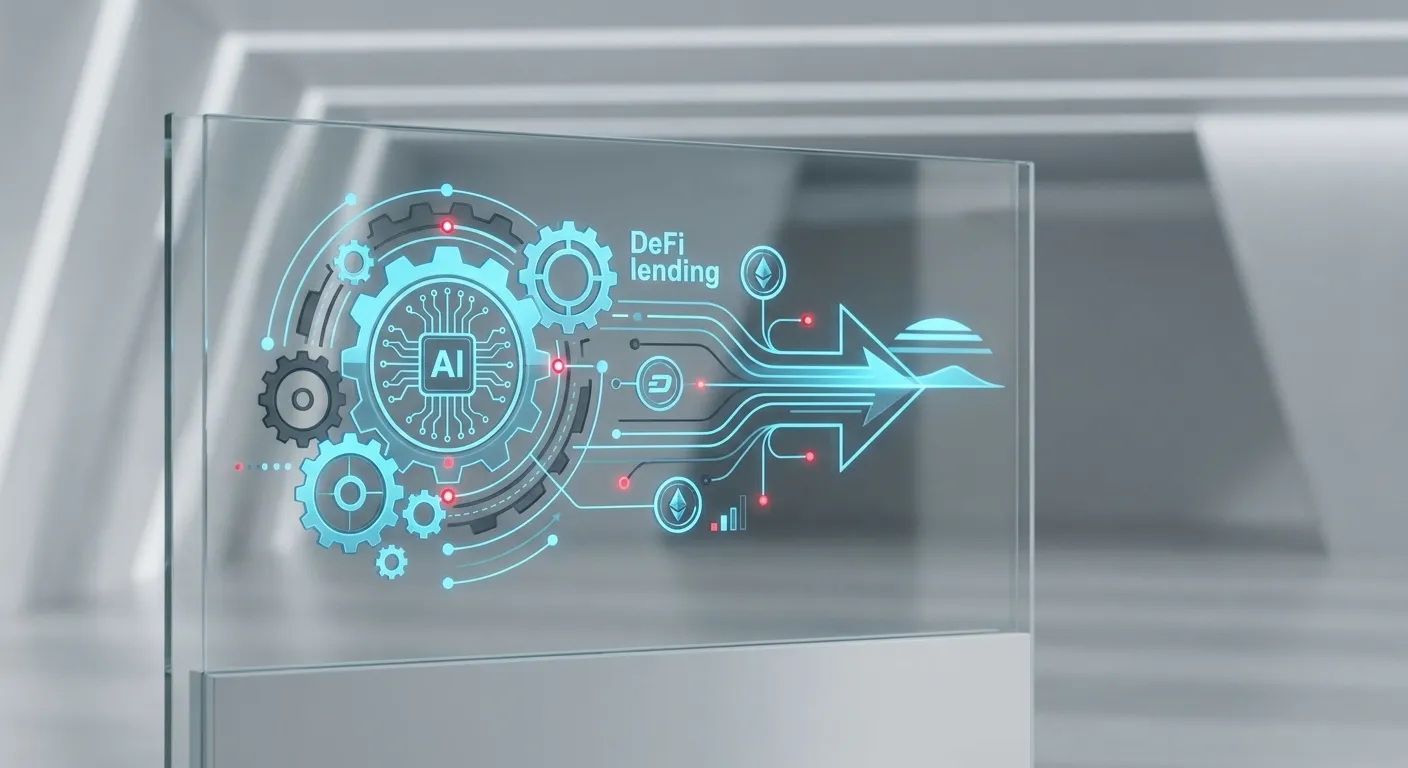
Decentralized Finance (DeFi) has already disrupted traditional financial systems. It offers unprecedented access and transparency. Now, with the advent of artificial intelligence, we stand on the cusp of an even more transformative era: the AI DeFi lending future. This convergence promises to enhance efficiency, reduce risks, and unlock new possibilities for both lenders and borrowers in the decentralized ecosystem. It moves beyond the current limitations of collateral-heavy lending models.
Predictive Analytics for Better Risk Assessment
At the heart of the AI DeFi lending future lies the power of predictive analytics. Currently, many DeFi lending protocols rely heavily on over-collateralization. This limits accessibility for many potential users. AI can change this by analyzing vast datasets. These include on-chain transaction history, social sentiment, and even off-chain credit scores (where applicable and privacy-compliant). Consequently, it builds more nuanced risk profiles. This allows for more accurate credit scoring and the prediction of loan default probabilities. Thus, under-collateralized or even uncollateralized lending models can emerge safely. By integrating AI, DeFi platforms can make smarter, data-driven decisions. This expands their reach while maintaining financial stability.
Hyper-Personalized Lending Products
Imagine a lending experience tailored precisely to your financial behavior and needs. The AI DeFi lending future promises just that through hyper-personalization. AI algorithms can dynamically adjust interest rates. These adjustments are based on a borrower’s real-time risk profile, market conditions, and even their participation in various DeFi protocols. This could lead to innovative loan products. They might feature flexible repayment schedules, bespoke collateral requirements, or even loans that automatically adjust terms based on predefined smart contract triggers. Such personalized offerings would attract a broader user base. Furthermore, they would optimize capital efficiency for lenders, creating a more dynamic and responsive lending market.
The Evolution of DeFi Lending with Artificial Intelligence
The journey towards a more sophisticated decentralized lending ecosystem is accelerating. Traditionally, DeFi lending relied on simple, deterministic rules. These often required significant collateral, sometimes 150% or more of the loan value. This approach, while secure, restricts participation. It primarily benefits those with substantial existing capital. The integration of AI, however, represents a paradigm shift. It enables a more intelligent assessment of risk and opportunity. Moreover, this evolution is not merely about automation. It’s about creating adaptive systems that learn and improve over time. This makes the entire lending process more efficient and accessible. The AI DeFi lending future fundamentally redefines what’s possible in digital finance.
Enhanced Security and Fraud Detection
Security remains a paramount concern in the DeFi space. Vulnerabilities can lead to significant financial losses. Here, AI offers robust solutions. Machine learning algorithms can continuously monitor transactions and network activity. They identify unusual patterns that may indicate fraudulent behavior or potential exploits. For example, AI can detect flash loan attacks or other malicious activities in real-time. This proactive approach significantly enhances the security posture of lending protocols. Consequently, it builds greater trust among users. Stronger security is a cornerstone of the burgeoning AI DeFi lending future.
Optimized Liquidity Management
Liquidity is the lifeblood of any lending market. Efficient management of capital ensures that funds are available for borrowers and that lenders earn optimal returns. AI can play a crucial role in this area. It can predict market demand for specific assets and optimize the allocation of liquidity across various pools. Furthermore, AI algorithms can dynamically adjust lending rates based on real-time supply and demand, ensuring that capital is always deployed efficiently. This leads to better yields for lenders and more competitive rates for borrowers. Optimized liquidity management is a key component of the successful AI DeFi lending future.
Bridging the Gap: Real-World Assets and AI-Powered Oracles
A significant challenge for DeFi has been integrating real-world assets (RWAs). These include real estate or traditional financial instruments, into the decentralized ecosystem. AI can help bridge this gap. AI-powered oracles can provide more reliable and nuanced data feeds. These feeds are essential for valuing RWAs and for assessing their associated risks. By processing complex, off-chain information, AI can enable the tokenization and use of a broader range of collateral types within DeFi lending protocols. This expansion of eligible collateral is vital for the widespread adoption of the AI DeFi lending future. It connects the digital economy more closely with traditional finance. For more information on real-world assets in DeFi, you can visit Cointelegraph.
The Regulatory Landscape and AI in DeFi
As the AI DeFi lending future unfolds, the regulatory landscape will undoubtedly evolve. Governments and financial bodies are increasingly scrutinizing decentralized finance. The introduction of AI adds another layer of complexity. Regulators will likely focus on issues such as data privacy, algorithmic transparency, and consumer protection. DeFi protocols integrating AI must prioritize compliance while maintaining decentralization principles. Developing explainable AI models and robust data governance frameworks will be critical. This ensures responsible innovation. Navigating these regulatory challenges will be essential for the sustainable growth of AI-enhanced decentralized lending.
Accessibility and Financial Inclusion
One of DeFi’s core promises is financial inclusion. Traditional finance often excludes vast populations due to stringent credit requirements. The AI DeFi lending future has the potential to expand this inclusion significantly. By using alternative data points and more sophisticated risk models, AI can assess creditworthiness for individuals without a traditional credit history. This means more people can access capital for personal or business needs. This expanded access can empower underserved communities globally. It creates a more equitable financial system. Increased accessibility is a fundamental benefit of this evolving financial paradigm.
Challenges and Considerations for the AI DeFi Lending Future
While the prospects are exciting, implementing the AI DeFi lending future is not without challenges. Data quality is paramount; AI models are only as good as the data they consume. Ensuring reliable, unbiased data sources is crucial. Furthermore, the inherent complexity of AI models can sometimes conflict with DeFi’s transparency principles. Developers must strive for explainable AI to maintain user trust. Scalability of blockchain networks is another consideration. AI-driven analytics require significant computational resources. Ensuring these operations are efficient and cost-effective on a decentralized ledger is vital. Addressing these challenges thoughtfully will be key to realizing the full potential of the AI DeFi lending future.
The Path Forward: Collaboration and Innovation
The realization of a robust AI DeFi lending future will require significant collaboration. This includes developers, researchers, policymakers, and the wider community. Innovation in AI models, blockchain infrastructure, and regulatory frameworks must occur in tandem. Open-source development and community-driven governance will continue to play a crucial role. By fostering an environment of continuous improvement and shared knowledge, the decentralized finance space can collectively build a more resilient, intelligent, and inclusive lending system. The journey ahead is complex, but the potential rewards are immense. For more insights into AI in finance, consider resources like IBM Research.
Conclusion: A Smarter, More Accessible Financial Horizon
The convergence of AI and DeFi is not merely an incremental improvement. It represents a fundamental reshaping of how lending operates in the digital age. From predictive analytics and personalized products to enhanced security and expanded financial inclusion, the benefits are profound. While challenges remain, the proactive development and thoughtful implementation of AI technologies will pave the way for a more efficient, equitable, and intelligent financial future. The AI DeFi lending future is rapidly approaching, promising to redefine financial interactions for everyone.
FAQ: What is the primary benefit of artificial intelligence in decentralized lending?
The primary benefit is enhanced risk assessment. AI analyzes vast data to create more accurate borrower profiles. This moves beyond traditional collateral requirements.
FAQ: How can AI personalize lending terms?
AI algorithms can dynamically adjust interest rates and repayment schedules. These adjustments are based on a borrower’s real-time risk, market conditions, and DeFi engagement. This creates tailored loan products.
FAQ: Will AI lead to uncollateralized loans in DeFi?
AI’s advanced predictive capabilities can enable under-collateralized or even uncollateralized lending models. This is achieved by accurately forecasting default probabilities and managing risk effectively.
FAQ: What role does AI play in improving security for decentralized lending?
AI enhances security by continuously monitoring transactions and network activity. It identifies unusual patterns that may indicate fraud or exploits in real-time. This provides proactive protection.
FAQ: How does AI contribute to financial inclusion in the digital economy?
AI helps by assessing creditworthiness using alternative data points. This allows individuals without traditional credit histories to access capital. It expands financial services to a broader population globally.
Explore more: More from TrueCryptoNews