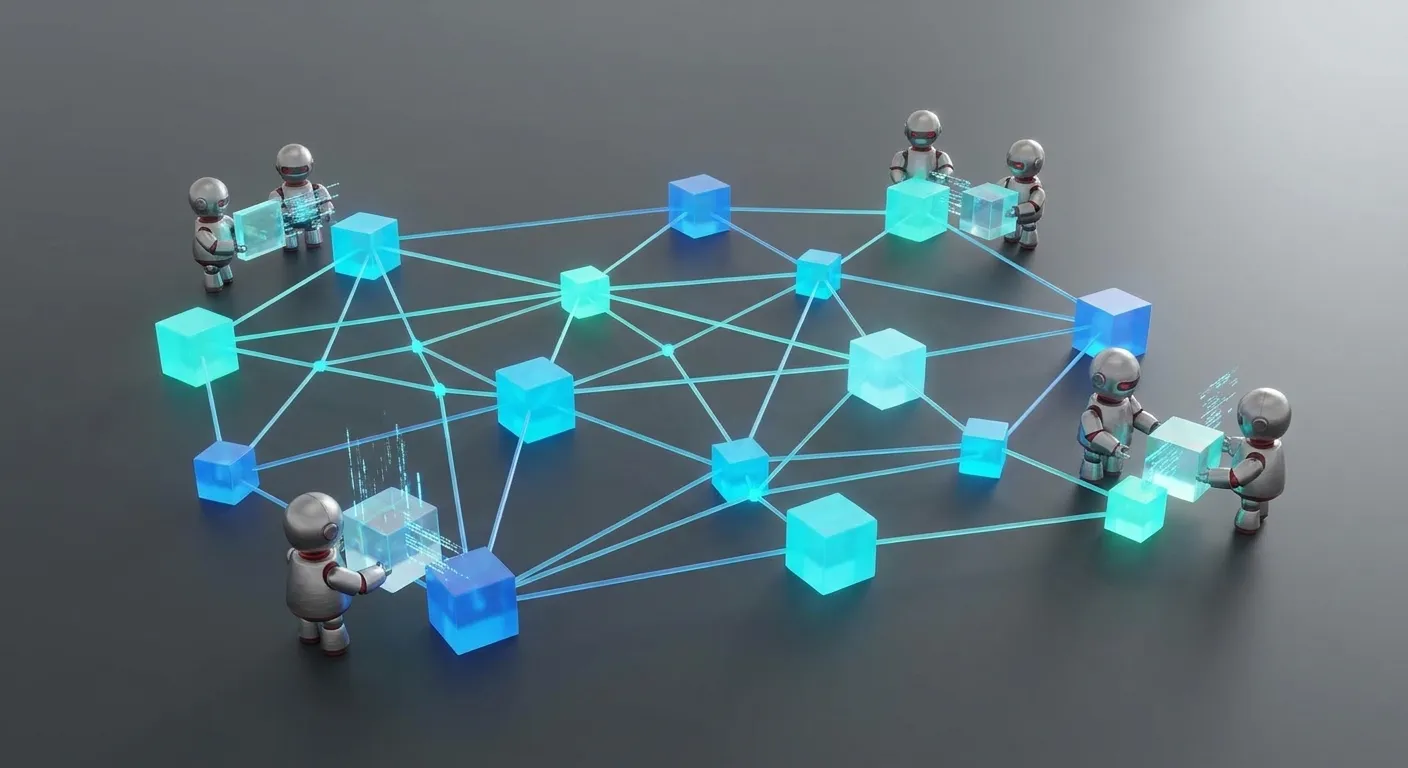
The convergence of artificial intelligence and blockchain technology has moved beyond speculative hype, solidifying its position as fundamental infrastructure for decentralized finance (DeFi) and autonomous digital economies. In 2026, a pivotal development in this landscape is the emergence of AI agents blockchain DeFi as critical players, increasingly recognized as the ‘new primary users’ of these decentralized systems. This shift signifies a profound evolution, transforming how value is exchanged, decisions are made, and operations are automated within the crypto space. Indeed, these intelligent entities are at the forefront of innovation.
What Are AI Agents in Blockchain DeFi?
Autonomous AI agents are sophisticated software entities equipped with self-managed wallets and advanced decision-making capabilities. Unlike traditional smart contracts that execute predefined logic, these agents can interpret real-time market data, assess risk, and autonomously execute complex strategies across DeFi protocols. Their development marks a structural maturity in the AI x Crypto sector, moving from theoretical discussions to tangible utility. Consequently, their impact on the digital asset landscape is considerable.
From Hype to Utility: The Evolution of AI in Blockchain
The period of 2025-2026 has been characterized by a significant transformation, where AI’s role in blockchain has matured. Earlier, much of the focus was on potential, but now, the emphasis is firmly on practical applications and robust infrastructure. This maturity enables AI agents to perform tasks that previously required human intervention or complex, multi-step smart contract interactions, thereby streamlining operations and enhancing efficiency across the board. They are not merely tools but active participants in the digital economy. Furthermore, this evolution is accelerating rapidly.
How AI Agents are Reshaping Decentralized Finance
AI agents are fundamentally altering the operational dynamics of DeFi. Through automated execution, they can manage liquidity pools, optimize yield farming strategies, and even participate in governance proposals by analyzing sentiment and potential outcomes. This level of automation is unprecedented. They influence trading by identifying arbitrage opportunities or executing complex order types with precision, far exceeding human capabilities in speed and data processing. Prediction markets, in particular, are leveraging on-chain intelligence generated and acted upon by these agents, leading to more accurate and efficient market outcomes. Therefore, the efficiency gains are substantial.
Practical Applications and Real-World Impact
Consider the impact on liquidity provision, where AI agents can dynamically adjust asset allocations to maximize returns while minimizing impermanent loss. In yield farming, they can automatically rebalance portfolios across various protocols to chase the highest stable yields. For risk management, AI agents can monitor protocol health, detect anomalies, and even trigger emergency measures in response to detected vulnerabilities, significantly enhancing the security posture of DeFi applications. This proactive approach to managing digital assets is crucial. Similarly, their role in AI crypto investment strategies is redefining how alpha is generated.
The Role of AI Agents in Governance and Decentralization
Beyond trading and liquidity, the influence of AI agents extends to decentralized governance. These agents can analyze vast amounts of data related to proposals, community sentiment, and potential market impacts, informing their voting decisions or even submitting proposals themselves. This introduces a new layer of efficiency and data-driven decision-making into DAOs. However, the integration also raises important questions about the nature of decentralization when autonomous entities hold significant voting power. Balancing efficiency with true community representation remains a key challenge. Ultimately, thoughtful implementation is required.
The Technological Underpinnings of AI Agents in Blockchain DeFi
The capabilities of AI agents are built upon several advanced technological pillars. Machine learning algorithms enable them to learn from historical data and adapt to new market conditions. Secure multi-party computation (MPC) and zero-knowledge proofs (ZKPs) ensure privacy and security in their operations, especially when dealing with sensitive financial data. Furthermore, robust oracle networks provide these agents with reliable off-chain data, which is essential for informed decision-making in real-time. Without these foundational technologies, the advanced functionality of these agents would not be possible. Moreover, continuous innovation in these areas is expected.
Interoperability and Cross-Chain Operations
A significant trend in the development of AI agents blockchain DeFi is their increasing ability to operate across multiple blockchain networks. This interoperability allows them to identify and capitalize on opportunities in a more expansive digital economy, moving assets and executing strategies seamlessly between different chains. For instance, an agent might identify a yield opportunity on an Ethereum-based protocol while managing liquidity on a Solana-based DEX. This cross-chain capability maximizes efficiency and capital utilization, demonstrating the growing sophistication of these autonomous systems. Consequently, the scope of their operations is broadening.
Security Considerations and Challenges
While AI agents offer immense benefits, their deployment in DeFi introduces new security challenges. The autonomous nature of these agents means that vulnerabilities in their code or decision-making algorithms could lead to significant financial losses. Therefore, rigorous auditing, formal verification, and continuous monitoring are essential. Furthermore, the potential for malicious AI agents or attacks targeting these systems necessitates robust defense mechanisms. Ensuring the integrity and trustworthiness of these agents is paramount for their widespread adoption. This is an ongoing area of focus for developers.
The Future Landscape: AI Agents as the Standard Users
Looking ahead, it is plausible that AI agents blockchain DeFi will not just be advanced tools but the standard interface for a significant portion of DeFi interactions. As these systems become more sophisticated and reliable, individual users may delegate more complex financial management tasks to these agents, focusing instead on setting higher-level strategic goals. This paradigm shift could democratize access to advanced financial strategies, making them available to a broader audience who might lack the time or expertise to manage them manually. Indeed, this represents a significant evolution in user interaction.
Economic Implications and Market Efficiency
The widespread adoption of autonomous agents could lead to unprecedented levels of market efficiency. Arbitrage opportunities might be almost instantly closed, liquidity provision could become hyper-optimized, and price discovery could become more accurate and responsive. However, this also raises questions about market volatility and the potential for flash crashes if agents react in unison to certain market signals. Regulators and developers will need to carefully consider these dynamics as the technology matures. Navigating the digital asset regulatory framework will be crucial here.
Ethical Considerations and Control Mechanisms
The increasing autonomy of AI agents in DeFi also brings ethical considerations to the forefront. Who is accountable when an autonomous agent makes a suboptimal or erroneous decision? How can we ensure these agents align with human values and societal goals? Implementing robust control mechanisms, circuit breakers, and transparent audit trails will be vital. Furthermore, ongoing research into explainable AI (XAI) is critical to understanding and trusting the decisions made by these complex systems. This ensures responsible development and deployment.
The Broader Impact of AI Agents on Digital Economies
The influence of AI agents extends beyond just DeFi. They are poised to become integral to various facets of the broader digital economy, including supply chain management, data markets, and even metaverse economies. Their ability to autonomously execute agreements, manage resources, and interact with other digital entities makes them ideal for automating complex processes across industries. This broader integration underscores their transformative potential, far beyond their current applications. The expansion of their utility is a continuous process.
Collaboration Between Human and AI Agents
While AI agents are becoming increasingly autonomous, the future likely involves a synergistic collaboration between human users and these intelligent systems. Humans will set the strategic objectives, monitor performance, and intervene when necessary, while AI agents handle the high-frequency execution and data analysis. This hybrid model combines the best of human intuition and oversight with AI’s speed and analytical power, leading to more robust and adaptable systems. Such collaboration will define the next era of digital finance. Moreover, it optimizes outcomes.
The Role of Decentralized AI Platforms
The development of decentralized AI platforms is foundational for the secure and transparent operation of AI agents. These platforms provide the infrastructure for training, deploying, and managing AI models in a way that is resistant to censorship and single points of failure. They ensure that the algorithms driving these agents are auditable and verifiable, building trust in their operations. TrueCryptoNews has previously explored decentralized AI platforms and their emerging opportunities, highlighting their importance in this evolving ecosystem. This infrastructure is critical for scalability.
Conclusion
The rise of AI agents blockchain DeFi marks a significant turning point in the evolution of decentralized finance and autonomous digital economies. These intelligent entities are transitioning from theoretical concepts to indispensable actors, driving efficiency, automation, and innovation across the crypto landscape. While challenges related to security, ethics, and control remain, the trajectory is clear: AI agents will continue to shape how value is created, exchanged, and managed within decentralized systems. Their role as the new primary users promises a future where digital economies are more dynamic, intelligent, and responsive than ever before. TrueCryptoNews will continue to monitor these developments closely, providing timely insights into this rapidly evolving sector.
FAQ
What are autonomous AI entities in decentralized finance?
Autonomous AI entities in decentralized finance are sophisticated software programs that can independently manage digital wallets, analyze market data, and execute complex financial strategies across various DeFi protocols without human intervention. They act as active participants in the digital economy.
How do AI-powered agents enhance DeFi operations?
AI-powered agents enhance DeFi operations by automating tasks like liquidity management, yield farming optimization, and risk assessment. They can identify arbitrage opportunities, participate in governance, and adjust strategies in real time, leading to greater efficiency and potentially higher returns.
What are the main risks associated with AI-driven finance agents?
The main risks include vulnerabilities in their code, potential for unforeseen market reactions if agents act in unison, and ethical questions regarding accountability for autonomous decisions. Robust security measures and continuous monitoring are therefore crucial.
Will AI systems eventually replace human investors in crypto?
While AI systems will automate many complex tasks, they are more likely to complement human investors rather than replace them entirely. Humans will likely focus on strategic oversight, ethical considerations, and adapting to novel situations, while AI handles high-frequency execution and data analysis.
How do intelligent agents interact with blockchain technology?
Intelligent agents interact with blockchain technology by leveraging smart contracts to execute transactions, accessing on-chain data for analysis, and utilizing decentralized oracle networks for off-chain information. They operate within the secure, transparent, and immutable framework provided by blockchain.