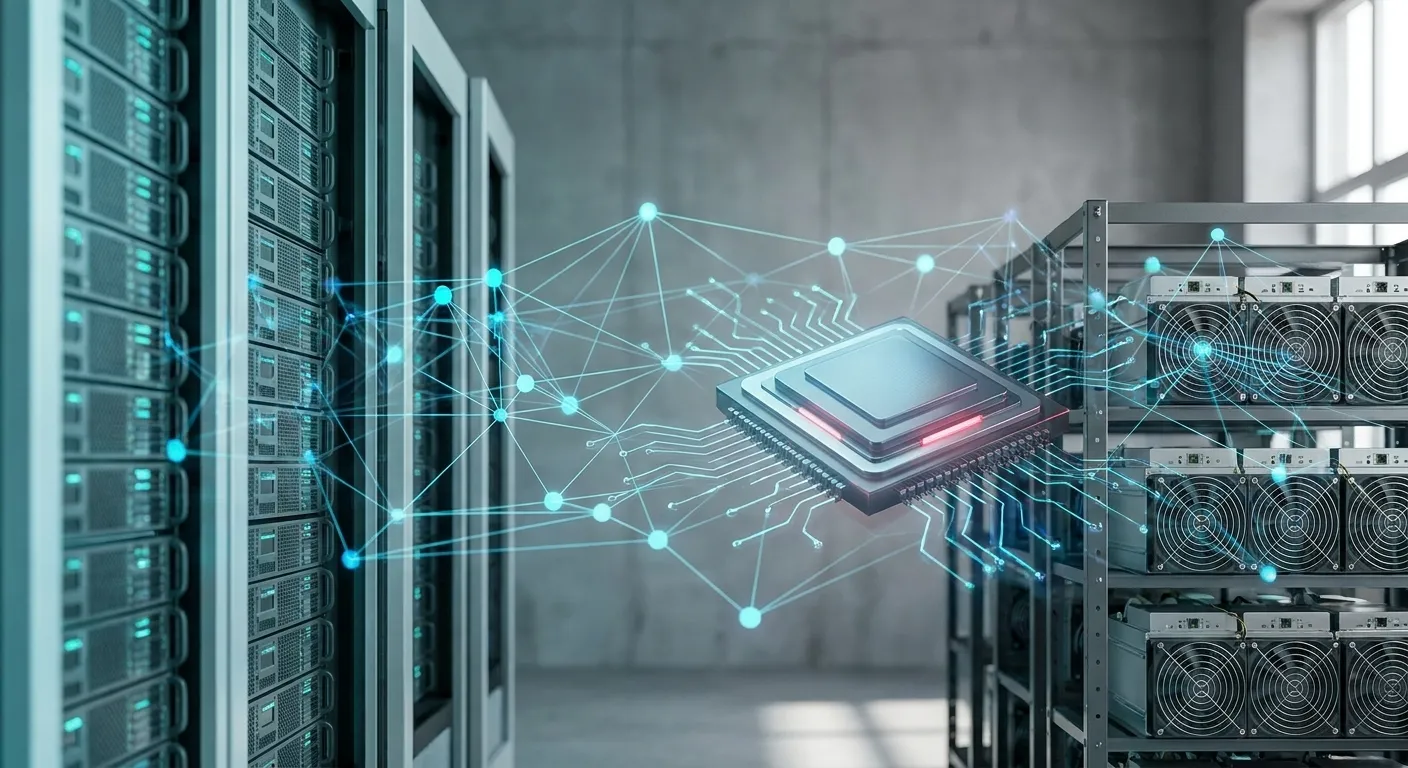
The increasing demand for AI training and inference has created a crucial new sector within the cryptocurrency landscape: Decentralized Physical Infrastructure Networks (DePIN). By 2025-2026, DePIN has cemented its position as foundational infrastructure, establishing vital secondary markets for cost-effective, uncensored power. This article explores the rise of decentralized compute AI crypto, highlighting how it’s utilizing idle GPU power and even transforming the revenue streams of traditional Bitcoin miners.
Moreover, this evolution signals a significant shift in how computational resources are acquired and deployed. It offers a robust alternative to centralized models, promising greater accessibility and resilience for AI innovators worldwide. Consequently, understanding this paradigm is essential for anyone tracking the intersection of blockchain and artificial intelligence.
The Foundation of Decentralized Compute AI Crypto: What is DePIN?
DePIN protocols aggregate globally distributed hardware resources. These often idle assets, such as GPUs, storage, or bandwidth, become available for decentralized applications. Specifically for AI, this means providing access to immense computational power without the centralized control or high costs associated with traditional cloud providers. This model emphasizes efficiency, creating a resilient, permissionless, and censorship-resistant compute layer. Indeed, this layer is crucial for the future of AI development.
Furthermore, DePIN represents a novel approach to resource allocation. It democratizes access to powerful computing. This allows smaller teams and individual researchers to compete with well-funded corporate entities. In addition, the distributed nature inherently enhances security and reduces single points of failure, which is vital for robust AI systems.
Render Network: The ‘Nvidia of the Blockchain’
Among the leading DePIN projects, Render Network (RENDER) has particularly distinguished itself. It has solidified its position as the ‘Nvidia of the Blockchain.’ Render connects users needing GPU compute with providers owning idle GPUs. This facilitates rendering, machine learning, and other high-performance computing tasks on a decentralized network. This innovative approach offers a scalable and economically viable alternative to traditional centralized GPU farms, making advanced AI capabilities accessible to a broader range of innovators. Render Network’s official site provides further details on their ecosystem.
Additionally, Render’s tokenomics incentivize participation and resource contribution. This ensures a vibrant and ever-expanding network of computational power. Consequently, it supports various AI applications, from complex simulations to real-time inference. The project’s growth reflects the increasing demand for decentralized alternatives in high-performance computing.
Bitcoin Miners Shifting to AI Computing
A significant trend emerging in 2026 is the strategic pivot of Bitcoin miners towards AI and high-performance computing (HPC). Projections indicate that up to 70% of Bitcoin miners’ revenue could come from AI and HPC by the end of 2026. This is a substantial increase from just 30% earlier in the year. Companies like IREN are actively transitioning their operations from solely Bitcoin mining to AI cloud computing. They are repurposing their vast energy and hardware infrastructure for AI workloads. This shift is driven by the increasing profitability and demand for AI compute, offering a diversified and potentially more stable revenue stream than volatile cryptocurrency mining alone. For more insights into market shifts, consider reading about Bitcoin Market Cycle Analysis: Decoding Post-Halving Trends.
This transition is not merely opportunistic. It also represents a strategic re-evaluation of existing assets. Bitcoin mining infrastructure, particularly its energy-intensive components, can be efficiently repurposed for AI tasks. This creates a symbiotic relationship between two rapidly evolving technological sectors. Meanwhile, the demand for AI compute continues to outpace supply, making this pivot increasingly attractive.
Why This Shift Matters for AI Development
This transition provides several critical advantages for the AI industry. Firstly, it offers access to a massive, underutilized pool of computational resources. This drives down costs for AI training and inference. Secondly, the decentralized nature of these networks provides an uncensored and resilient environment. This is crucial for sensitive or proprietary AI models. Lastly, it fosters innovation by democratizing access to powerful computing. This enables smaller teams and individual researchers to compete with well-funded corporate entities.
Furthermore, this shift promotes a more sustainable model for high-performance computing. By utilizing existing infrastructure, it reduces the need for new, energy-intensive builds. This aligns with broader efforts towards environmental responsibility in technology. In fact, this convergence of mining and AI represents a crucial step towards a more efficient and equitable digital future.
The Broader Impact of Decentralized Compute AI Crypto on the Ecosystem
The emergence of decentralized compute AI crypto is reshaping the entire digital asset ecosystem. It introduces new investment opportunities and fundamentally alters how AI models are developed and deployed. This sector is not just about distributing computational tasks; it’s about building a new paradigm for digital infrastructure that is open, fair, and resistant to censorship. Consequently, investors and developers are closely monitoring projects that contribute to this burgeoning field.
Moreover, the integration of AI with decentralized networks enhances the utility and value proposition of various cryptocurrencies. Tokens associated with DePIN projects often represent ownership or access rights to computational resources. This creates a tangible link between digital assets and real-world utility. Indeed, this is a significant step towards broader adoption and understanding of blockchain technology.
New Economic Models and Tokenomics
DePIN projects introduce innovative economic models. These models incentivize participants to contribute their hardware resources. For example, users are rewarded with tokens for providing GPU power or storage. This creates a dynamic marketplace where supply and demand dictate resource allocation and pricing. This is a stark contrast to the fixed pricing structures of traditional cloud services.
Similarly, the tokenomics of these projects are carefully designed to foster network growth and sustainability. Staking mechanisms, governance models, and reward distribution protocols ensure that the network remains robust and equitable. This encourages long-term participation and investment in the decentralized infrastructure. You can learn more about related investment strategies in Beyond Hype: How AI Crypto Investment Strategies Are Redefining Alpha in 2026.
Challenges and Opportunities for Decentralized Compute AI Crypto
While the prospects for decentralized compute AI crypto are promising, several challenges remain. Scalability, interoperability, and user experience are key areas requiring continuous development. Ensuring that these decentralized networks can handle the immense computational demands of advanced AI models is paramount. Furthermore, integrating these systems with existing AI frameworks and making them user-friendly for developers are crucial for widespread adoption.
Nevertheless, the opportunities far outweigh the challenges. The potential for cost reduction, enhanced security, and censorship resistance makes decentralized compute an attractive option for a wide range of AI applications. From scientific research to creative content generation, the applications are diverse and impactful. This truly represents a frontier for innovation in both AI and blockchain.
Addressing Scalability and Performance
Scalability is a primary concern for any decentralized network. For AI workloads, this means handling massive datasets and complex algorithms efficiently. DePIN projects are actively developing solutions, including sharding, layer-2 protocols, and optimized consensus mechanisms. These innovations aim to ensure that the networks can grow with the demands of AI. Performance, likewise, is being enhanced through advanced hardware integration and efficient task distribution algorithms. Consequently, these efforts are vital for competing with centralized alternatives.
Moreover, the distributed nature of DePIN can inherently offer a level of redundancy and fault tolerance that centralized systems struggle to match. If one node fails, others can pick up the slack, ensuring continuous operation. This resilience is a significant advantage for mission-critical AI applications. The development of robust network architecture is a continuous priority.
Ensuring Interoperability and User Experience
Interoperability is another critical factor. Decentralized compute networks must be able to seamlessly integrate with existing AI tools and platforms. This includes compatibility with popular machine learning frameworks like TensorFlow and PyTorch. Projects are working on APIs and SDKs to facilitate this integration, making it easier for developers to transition to decentralized solutions. Similarly, a smooth user experience is essential for broad adoption. Simplified interfaces and intuitive workflows will attract more users to the decentralized AI ecosystem. Decentralized AI Platforms: A Guide to Emerging Opportunities offers further reading on this topic.
Furthermore, developer education and community support play a significant role. Providing comprehensive documentation, tutorials, and active forums helps onboard new users and fosters a collaborative environment. This collective effort is essential for overcoming technical hurdles and expanding the reach of decentralized AI. The focus is on making these powerful tools accessible to everyone.
The Future Landscape: Decentralized Compute AI Crypto and Beyond
The convergence of decentralized computing, AI, and cryptocurrency is creating a future where computational power is a public utility, not a proprietary resource. As DePIN continues to mature, we can expect even more innovative applications and deeper integration into various industries. The shift of Bitcoin miners towards AI computing is just one indicator of this profound transformation. Indeed, this trend signifies a move towards a more resilient, efficient, and equitable digital infrastructure.
Looking ahead, the potential for decentralized AI to drive scientific breakthroughs, foster creative expression, and democratize access to advanced technology is immense. This evolving landscape requires continuous monitoring and adaptation from investors, developers, and policymakers alike. The journey of decentralized compute AI crypto is only just beginning, promising a future rich with innovation and opportunity. For broader market trends, consider external resources like CoinDesk for general crypto news.
As this sector expands, it will undoubtedly influence regulatory discussions. The unique characteristics of decentralized networks, particularly their global and permissionless nature, present new considerations for governance. Staying informed about the Navigating the Crypto Regulatory Landscape: 2026’s Impact on Innovation and Investment will be crucial for all stakeholders.
Conclusion
The ascent of DePIN and the strategic pivot of Bitcoin miners towards AI computing mark a pivotal moment in the digital age. Decentralized compute AI crypto is not merely a niche application; it is becoming the backbone for the next generation of artificial intelligence. By providing cost-effective, uncensored, and resilient computational resources, this sector is democratizing AI development and fostering innovation on a global scale. As these technologies continue to converge, we anticipate a future where powerful AI is accessible to all, driven by the decentralized power of blockchain networks.
FAQ
What is decentralized AI computing?
Decentralized AI computing involves using distributed networks, often powered by blockchain technology, to provide computational resources for artificial intelligence tasks. This differs from traditional centralized cloud services by distributing the workload across many independent nodes, enhancing resilience and reducing costs.
How are Bitcoin miners getting involved with AI?
Bitcoin miners are increasingly repurposing their existing hardware and energy infrastructure to perform high-performance computing tasks required for AI training and inference. This strategic shift diversifies their revenue streams, moving beyond solely cryptocurrency mining to capitalize on the growing demand for AI compute.
What is Render Network’s role in this ecosystem?
Render Network acts as a leading platform within the DePIN space, connecting users who need GPU compute power with providers who have idle GPUs. It facilitates tasks like rendering and machine learning on a decentralized network, effectively becoming a key player in providing distributed computational resources for AI.
What are the benefits of using decentralized compute for AI?
The benefits include reduced costs for AI training and inference, enhanced security through distributed networks, censorship resistance, and democratized access to powerful computing resources. This fosters innovation by enabling smaller teams and individual researchers to participate in advanced AI development.
What challenges does decentralized AI compute face?
Key challenges include ensuring scalability to handle large AI workloads, achieving seamless interoperability with existing AI frameworks, and improving user experience for developers. Ongoing efforts in these areas are crucial for widespread adoption and sustained growth of the sector.