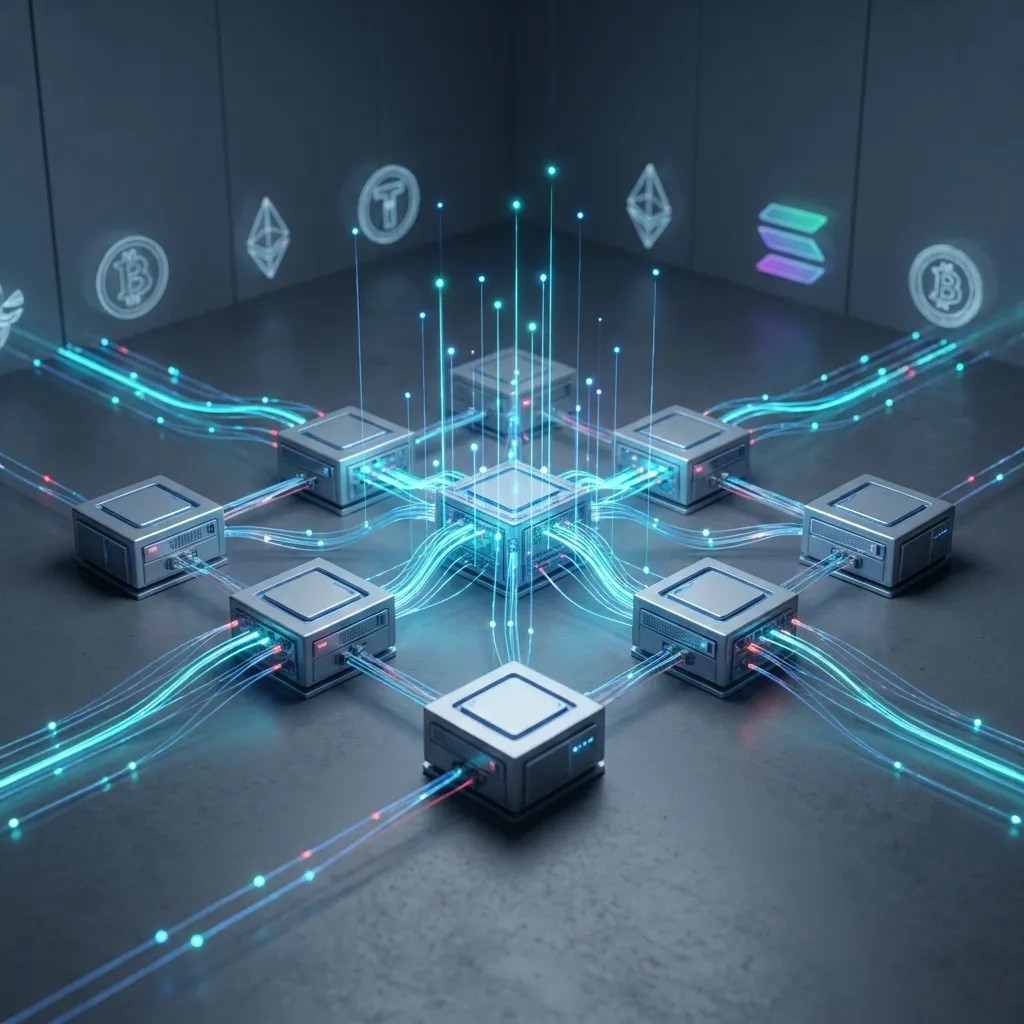
The cryptocurrency and AI landscape is rapidly evolving, with a significant shift from speculative ventures to tangible utility. At the heart of this transformation are decentralized AI compute networks, emerging as fundamental infrastructure for decentralized finance (DeFi) and autonomous digital economies. These networks are not just a trend; they represent a structural maturity in the convergence of AI and blockchain, offering critical secondary markets for cost-effective, uncensored power essential for AI training and inference.
The growth in both sectors has created an urgent need for robust, scalable, and secure computational resources. Centralized providers often come with high costs, potential censorship, and single points of failure. Consequently, the distributed model offers a compelling alternative, fostering innovation and accessibility across the digital asset space. This transition marks a pivotal moment, signaling a more integrated and resilient future for both AI and blockchain technologies. Furthermore, it paves the way for new paradigms in how data is processed and utilized.
The Rise of Decentralized Compute (DePIN)
In 2025-2026, the concept of Decentralized Physical Infrastructure Networks (DePIN) has moved beyond theoretical discussions into practical application. Protocols like Render Network (RENDER) and Akash are establishing themselves as vital components of this new digital economy. They aggregate idle GPU power from a global network of contributors, making high-performance computing accessible and efficient. This model directly addresses the surging demand for computational resources driven by AI advancements, providing an alternative to centralized cloud providers.
Render Network, for instance, is solidifying its position as the “Nvidia of the Blockchain.” Its distributed rendering capabilities are expanding to encompass general-purpose AI computation, allowing artists, developers, and researchers to tap into a vast, decentralized pool of GPU power. This is particularly significant given the projections that up to 70% of Bitcoin miners’ revenue could come from AI and high-performance computing by the end of 2026, a substantial increase from earlier in the year. Companies such as IREN are actively transitioning their operations from traditional Bitcoin mining to AI cloud computing, underscoring this paradigm shift.
Akash Network complements this by providing a decentralized marketplace for cloud computing resources, allowing users to lease compute power from a global network of providers. This creates a competitive environment that drives down costs and enhances accessibility, fostering innovation in AI development without the bottlenecks of centralized systems. Moreover, this decentralized approach aligns perfectly with the ethos of blockchain technology, emphasizing transparency and user control.
The Economic Impact of Distributed AI Infrastructure
The economic implications of these distributed AI infrastructure networks are profound. By reducing the barriers to entry for AI development, they democratize access to powerful computing resources. This fosters a more competitive and innovative environment, benefiting startups and independent researchers who might otherwise be priced out of the market. Consequently, this leads to a broader range of AI applications and services.
Furthermore, the ability to repurpose existing hardware, such as GPUs from former crypto mining operations, represents a sustainable and efficient use of resources. This not only reduces waste but also provides new revenue streams for hardware owners. Therefore, the economic model supports both innovation and environmental responsibility. The shift also impacts traditional cloud service providers, compelling them to adapt to this new competitive landscape.
Why Decentralized AI Compute Networks Matter for Crypto and AI
The integration of decentralized GPU networks into the crypto ecosystem offers several compelling advantages:
- Cost Efficiency: By tapping into idle hardware, DePIN projects can offer compute power at significantly lower costs than traditional providers, making AI development more accessible. This is a crucial factor for many emerging projects.
- Censorship Resistance: Decentralized networks are inherently more resilient to censorship and single points of failure, ensuring that AI models can be trained and deployed without external interference. This resilience is a core tenet of blockchain technology.
- Scalability: The ability to aggregate resources globally provides immense scalability, meeting the ever-growing demands of complex AI models and applications. As AI models become more sophisticated, this scalability will be increasingly vital.
- Enhanced Security: Distributing computation across many nodes reduces the risk of malicious attacks or data breaches compared to centralized systems. Data integrity is thus significantly improved.
- Transparency: Blockchain technology provides an immutable ledger of transactions and resource allocation, ensuring transparency in how compute power is utilized and compensated. This builds trust within the network.
These benefits collectively position decentralized AI compute networks as a foundational element for the next generation of decentralized applications. They enable a future where AI is not only powerful but also open, fair, and accessible to everyone. This shift also has implications for the broader AI’s Influence on Crypto Markets, creating new opportunities and challenges.
Real-World Applications and Use Cases
The practical applications of decentralized compute extend across various industries. For instance, in scientific research, researchers can access vast computational power for complex simulations and data analysis without relying on expensive institutional infrastructure. This accelerates discovery and innovation. Similarly, in media and entertainment, decentralized rendering services can dramatically reduce production costs and timelines for visual effects and animation studios.
Moreover, the development of autonomous agents and smart contracts on blockchain platforms will heavily depend on reliable and uncensored AI inference capabilities. Imagine AI-driven DeFi protocols that can execute complex strategies based on real-time market data, powered by these distributed networks. This represents a significant leap forward in automation and financial technology. For further insights into this convergence, consider exploring Decentralized AI Platforms: A Guide to Emerging Opportunities.
The Future Landscape: Integration and Innovation with Decentralized AI Compute Networks
The convergence of AI and blockchain is still in its early stages, but the trajectory is clear. Decentralized AI compute networks will play an increasingly critical role in shaping this future. We can expect to see deeper integration between these compute layers and various blockchain protocols, enabling more sophisticated and autonomous decentralized applications. This integration will likely lead to novel use cases that are currently unimaginable.
The growth of these networks is also attracting significant investment and development, driving continuous innovation in hardware utilization, network efficiency, and security protocols. Projects are actively exploring ways to optimize resource allocation and reward mechanisms for contributors. Consequently, the ecosystem is becoming more robust and mature. This evolution is also influencing AI Crypto Investment Strategies, as investors seek exposure to these foundational technologies.
As AI models become more complex and data-intensive, the demand for distributed and scalable compute power will only intensify. Centralized solutions may struggle to keep pace with this exponential growth and the inherent need for censorship resistance in a truly decentralized world. Therefore, the architectural advantages of decentralized AI compute networks become even more pronounced. This trend suggests a foundational shift in how computational resources are provisioned and consumed globally.
Challenges and Opportunities in Distributed AI Computing
Despite the immense potential, the development and adoption of distributed AI computing face certain challenges. Technical hurdles include ensuring consistent quality of service across diverse hardware, managing data privacy in a decentralized environment, and optimizing network latency for real-time AI applications. These are complex problems requiring innovative solutions from the developer community.
However, these challenges also present significant opportunities for growth and differentiation. Projects that can effectively address these issues will be well-positioned to capture a substantial share of the market. Furthermore, the regulatory landscape surrounding decentralized technologies is still evolving, posing both challenges and opportunities for innovation. Understanding Navigating the Crypto Regulatory Landscape is increasingly important for these projects.
Collaboration between different decentralized compute projects and traditional AI research institutions will be crucial for accelerating progress. Sharing best practices, developing open standards, and fostering interoperability can create a more cohesive and powerful ecosystem. This collaborative spirit is essential for overcoming the complexities inherent in building global, distributed infrastructure.
The Role of Tokenomics in Decentralized Compute
Tokenomics, the economic model underpinning blockchain-based projects, plays a vital role in the success of distributed compute networks. Utility tokens incentivize participants to contribute their computational resources, ensure fair compensation, and govern the network’s evolution. For instance, tokens can be used to pay for compute services, stake for network security, or participate in governance decisions.
Well-designed tokenomics models are essential for attracting and retaining a robust network of providers and users. They create a self-sustaining ecosystem where economic incentives align with the network’s overall health and growth. This innovative approach to resource management differentiates these platforms from traditional cloud services. In fact, many projects are refining their token models to optimize long-term sustainability and utility. You can find more information about this topic from sources like CoinDesk on DePIN, which offers additional context on the broader DePIN sector.
The value proposition of these tokens is directly tied to the utility and demand for the underlying compute resources. As AI adoption expands and more applications rely on decentralized infrastructure, the demand for these tokens is expected to grow. This creates a positive feedback loop, further strengthening the network and its ability to attract more computational power. Ultimately, robust tokenomics contribute significantly to the viability and expansion of decentralized AI compute networks.
Impact on Traditional Cloud Providers
The emergence of decentralized AI compute networks presents a significant competitive force for traditional centralized cloud providers like Amazon Web Services (AWS), Google Cloud, and Microsoft Azure. While these giants offer extensive services and infrastructure, their centralized nature inherently limits their ability to match the cost efficiency, censorship resistance, and distributed resilience offered by DePIN projects. Consequently, they may need to adapt their strategies.
Traditional providers might respond by integrating decentralized solutions or offering hybrid models. However, the fundamental architectural differences mean that distributed networks will likely carve out a distinct and growing niche. This competition ultimately benefits consumers by driving down costs and fostering innovation across the entire cloud computing landscape. We expect to see continued evolution in this competitive dynamic. Furthermore, the specialized needs of AI workloads are making decentralized options increasingly attractive. For example, NVIDIA’s AI platform demonstrates the immense computational power required, which decentralized networks aim to democratize.
Conclusion: Decentralized AI Compute Networks as a Pillar of the Digital Future
In conclusion, decentralized AI compute networks are not merely an innovation; they are a foundational shift in how computational power is accessed, utilized, and governed. They represent a critical pillar for the future of cryptocurrency, DeFi, and the broader digital economy, offering a robust, cost-effective, and censorship-resistant infrastructure for AI training and inference. As the demand for AI capabilities continues its exponential growth, these decentralized networks will become indispensable.
The ongoing development of protocols like Render Network and Akash, coupled with the increasing transition of traditional miners to AI computing, underscores the maturity and potential of this sector. By democratizing access to high-performance computing, these networks foster innovation, enhance security, and promote transparency, aligning perfectly with the core principles of blockchain technology. Investors and developers alike should pay close attention to the evolution of decentralized AI compute networks, as they are undoubtedly powering crypto’s future infrastructure.
FAQ
What are distributed AI processing platforms?
Distributed AI processing platforms are networks that pool computational resources from a global community to power artificial intelligence tasks. They offer a decentralized alternative to traditional cloud computing, providing cost-effective and censorship-resistant solutions for AI training and inference.
How do decentralized GPU networks benefit the crypto ecosystem?
Decentralized GPU networks offer several benefits to the crypto ecosystem, including lower costs for AI development, enhanced censorship resistance, greater scalability, and improved security through distributed architecture. They support the growth of DeFi and autonomous digital economies.
Which projects are leading the way in decentralized computing?
Projects like Render Network (RENDER) and Akash Network are prominent leaders in the decentralized computing space. They focus on aggregating idle GPU power and providing a decentralized marketplace for cloud resources, respectively, driving innovation in distributed AI infrastructure.
Why is distributed AI infrastructure important for the future of AI?
Distributed AI infrastructure is crucial for the future of AI because it democratizes access to powerful computing, reduces reliance on centralized entities, and provides a scalable and resilient foundation for advanced AI models. It fosters innovation and accelerates research and development.
How do economic incentives work in decentralized compute networks?
Economic incentives in these networks are typically managed through utility tokens. These tokens reward participants for contributing computational resources, are used to pay for services, and often grant governance rights, creating a self-sustaining and decentralized economic model.