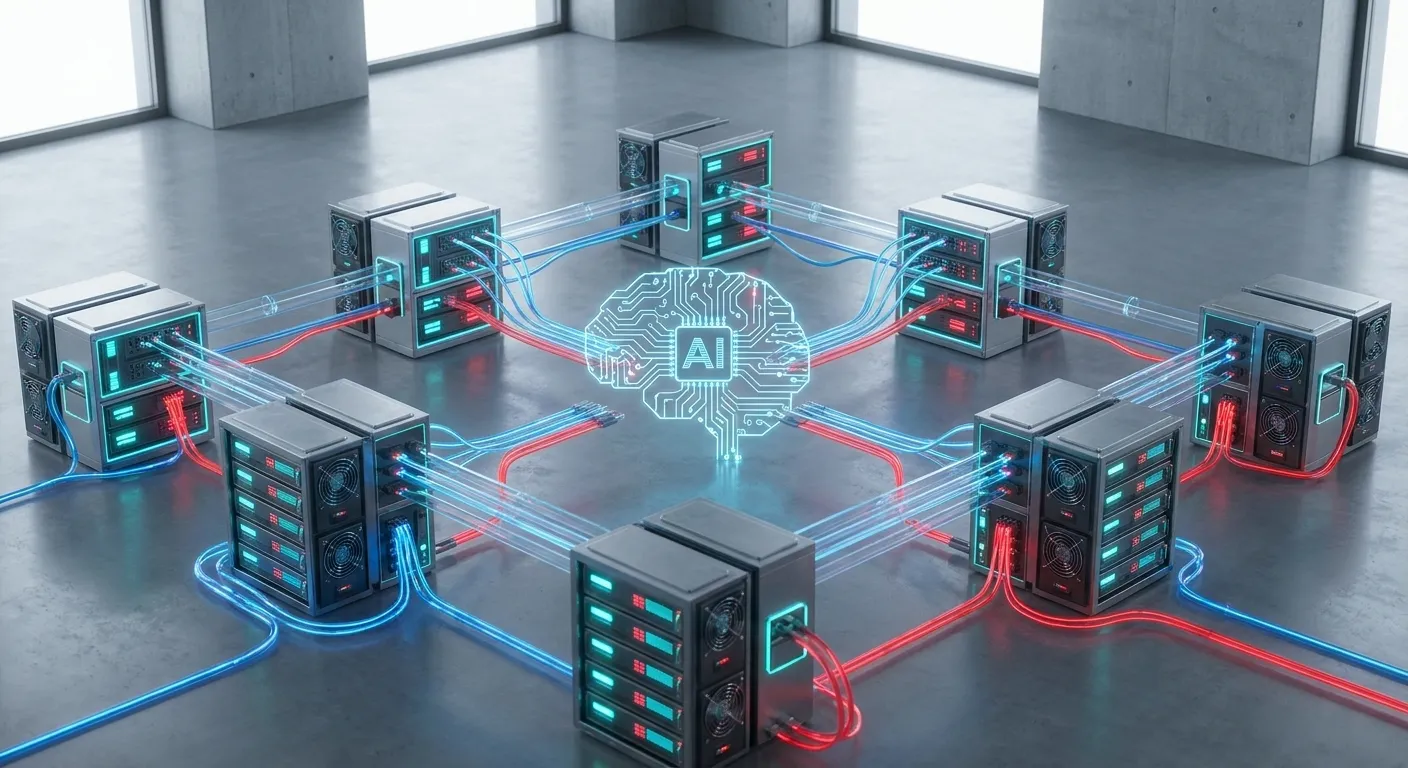
The insatiable demand for computational resources, particularly for training and running advanced AI models, is reaching unprecedented levels. As traditional centralized data centers grapple with scalability and cost, a new paradigm is emerging: decentralized AI compute power. This innovative approach, often referred to as Decentralized Physical Infrastructure Networks (DePIN), is rapidly becoming the critical secondary market for cost-effective, uncensored power for AI training and inference. It’s a foundational shift, aligning perfectly with the ongoing convergence of AI and blockchain technologies observed in 2025-2026.
The Imperative for Distributed AI Compute Resources
The need for robust, accessible, and censorship-resistant compute power for AI is more urgent than ever. Large language models and complex AI algorithms require immense GPU processing capabilities. These often come at a premium in centralized cloud environments. DePIN protocols address this by aggregating idle GPU power from a global network of participants, creating a distributed supercomputer that is both more resilient and often more economical.
This trend is epitomized by projects like Render Network (RENDER) and Akash, which are establishing themselves as vital infrastructure providers. Render Network, for instance, is solidifying its position as the “Nvidia of the Blockchain.” It enables creators and AI developers to access rendering and compute power by leveraging a vast network of idle GPUs. This not only democratizes access to high-performance computing but also creates new economic opportunities for GPU owners. Furthermore, these platforms provide a flexible alternative to traditional cloud services.
Bitcoin Miners Transitioning to AI & High-Performance Computing
A significant industry trend highlighting this shift is the transition of Bitcoin miners into AI and high-performance computing (HPC). As the economics of Bitcoin mining evolve, many operations are realizing the immense potential of repurposing their powerful GPU arrays for AI workloads. Projections indicate a dramatic increase in this trend: by the end of 2026, up to 70% of Bitcoin miners’ revenue could come from AI and HPC, a substantial leap from approximately 30% earlier in the year. Companies like IREN are actively making this transition, moving from pure Bitcoin mining to AI cloud computing.
This strategic pivot by mining operations underscores the growing value proposition of decentralized AI compute power. Miners already possess the infrastructure, cooling systems, and technical expertise to manage large-scale computing operations. By shifting focus, they can tap into a rapidly expanding market with diverse revenue streams, further fueling the growth of decentralized compute networks. This also provides a more sustainable business model for many mining entities.
Impact on AI Training and Inference
The availability of decentralized AI compute power has profound implications for the entire AI lifecycle:
- Cost Efficiency: By tapping into a global pool of resources, developers can significantly reduce the costs associated with training and running AI models. This democratizes access to advanced computing.
- Scalability and Resilience: DePINs offer unparalleled scalability, allowing AI projects to access vast amounts of compute power on demand. Moreover, the distributed nature of these networks enhances resilience, minimizing single points of failure.
- Censorship Resistance: Decentralized networks inherently provide a more censorship-resistant environment for AI development. This is especially important for sensitive or cutting-edge research.
- Innovation Acceleration: Lower barriers to entry and increased access to computing resources will accelerate innovation in AI. This allows smaller teams and startups to compete with larger, well-funded organizations.
Furthermore, the integration of decentralized AI platforms is creating new opportunities for developers. These platforms are crucial for fostering a more open and collaborative AI ecosystem. The implications extend across various sectors, from scientific research to creative industries.
The Role of DePINs in the AI-Crypto Convergence
Decentralized Physical Infrastructure Networks (DePINs) are central to the convergence of AI and blockchain. They represent a fundamental shift in how computational resources are provisioned and consumed. These networks utilize blockchain technology to coordinate and incentivize participants, ensuring fair compensation for GPU providers and transparent access for consumers. This synergy creates a powerful feedback loop, where advancements in one sector drive innovation in the other. For instance, the rise of AI’s influence on crypto markets further highlights this interconnectedness.
Projects building decentralized AI compute power are attracting significant investment and developer interest. They are not merely offering an alternative; they are building a more robust, equitable, and efficient infrastructure for the future of AI. This is particularly relevant as the industry moves towards more complex and data-intensive AI models. The efficiency gains are substantial, making previously unfeasible projects viable.
Economic Opportunities and Tokenomics
The rise of decentralized AI compute power also creates significant economic opportunities. GPU owners can monetize their idle hardware, transforming a depreciating asset into a revenue-generating one. This creates a distributed economy around compute resources. Tokens associated with DePIN projects often serve as the medium of exchange, incentivizing participation and ensuring network security. For example, the Render Network token (RENDER) facilitates transactions for rendering and compute services.
Tokenomics play a crucial role in aligning incentives. They encourage both supply-side participation (GPU providers) and demand-side consumption (AI developers). This creates a self-sustaining ecosystem where value is generated and distributed efficiently. Consequently, many investors are looking at these tokens as a new asset class with significant growth potential. Moreover, the transparency offered by blockchain in these systems builds greater trust among participants.
Challenges and Future Outlook for Decentralized AI Compute Power
Despite its immense promise, the widespread adoption of decentralized AI compute power faces certain challenges. These include ensuring consistent quality of service, managing regulatory complexities, and fostering user-friendly interfaces for a broader audience. The fragmented nature of the market can also present integration hurdles for developers accustomed to centralized cloud platforms. However, ongoing innovation is addressing these issues.
Looking ahead, the future of decentralized AI compute power appears bright. As AI models become even more sophisticated and ubiquitous, the demand for flexible, cost-effective, and resilient compute will only grow. DePINs are poised to meet this demand, becoming an indispensable part of the global AI infrastructure. We expect to see further integration with other decentralized technologies, creating a truly interconnected digital ecosystem. For a deeper understanding of market dynamics, one might consult Bitcoin market cycle analysis, as these trends often influence the broader crypto infrastructure.
Furthermore, the regulatory landscape for digital assets continues to evolve. This will undoubtedly impact the growth and operational frameworks of these decentralized networks. Staying informed about navigating the crypto regulatory landscape is crucial for stakeholders in this space. The collaborative nature of decentralized projects will likely aid in adapting to these changes effectively.
The Environmental Benefits of Distributed Compute
Beyond economic and technical advantages, decentralized AI compute power offers significant environmental benefits. Centralized data centers consume vast amounts of energy, contributing to carbon emissions. By distributing compute tasks across a network of existing, often idle, GPUs, DePINs can reduce the need for new, energy-intensive infrastructure. This approach optimizes resource utilization and can lead to a lower overall carbon footprint for AI development.
Many individual GPU owners already have their systems running for other purposes. Repurposing these for AI workloads means leveraging existing energy consumption rather than adding entirely new demand. This distributed model offers a more sustainable path for the future of AI. Therefore, it appeals to environmentally conscious developers and organizations. The efficiency gains are not just financial; they are ecological too.
Consider, for example, the energy demands of large-scale AI model training. When these tasks are spread across numerous smaller nodes, the cumulative environmental impact can be significantly less than running them in a single, massive data center. This makes decentralized AI compute power a key component in building green AI solutions. It aligns with global efforts to reduce energy consumption and promote sustainable technology.
Security and Privacy in Decentralized AI Computing
Security and privacy are paramount concerns in AI development. Centralized cloud providers, while robust, still present single points of failure and potential targets for data breaches. Decentralized AI compute power, by its very nature, enhances security and privacy. Data can be processed in a distributed manner, often using techniques like federated learning, where models are trained on local data without the raw data ever leaving the owner’s control.
Blockchain technology further bolsters security by providing immutable records of compute tasks and transactions. This transparency and tamper-resistance build greater trust within the network. For applications requiring high degrees of confidentiality, this distributed approach offers a compelling alternative. It reduces the risk of sensitive AI models or training data being compromised. Consequently, developers can build more secure AI applications. The integrity of the computations is verifiable.
Furthermore, the decentralized nature means no single entity has ultimate control over the compute resources or the data flowing through them. This reduces the power of any one organization to censor or manipulate AI models. This is particularly important for critical AI applications where neutrality and integrity are essential. Therefore, the security architecture is inherently more resilient against various threats. The system promotes a more robust and trustworthy environment for AI innovation.
Conclusion
The emergence of decentralized AI compute power marks a pivotal moment in the evolution of both artificial intelligence and the cryptocurrency landscape. By offering a more cost-effective, scalable, resilient, and censorship-resistant alternative to traditional centralized computing, DePINs are democratizing access to high-performance computing. This empowers a new generation of AI developers and researchers. The transition of Bitcoin miners into this space further validates its economic viability and growth potential.
As AI continues its rapid advancement, the infrastructure supporting it must also evolve. Decentralized AI compute power is not just a niche solution; it is becoming a foundational pillar for the future of AI. It paves the way for a more open, efficient, and equitable digital future. TrueCryptoNews will continue to monitor the exciting developments in this rapidly expanding sector, providing timely insights for our readers.
FAQ
What is decentralized AI compute power?
It refers to a distributed network of computing resources, often powered by idle GPUs, that collectively provide the processing power for AI training and inference. These networks utilize blockchain technology to coordinate and incentivize participants.
Why is distributed AI computing becoming important?
The increasing demand for AI’s computational needs, coupled with the high costs and scalability limitations of centralized cloud services, makes distributed AI computing crucial. It offers more affordable, resilient, and censorship-resistant alternatives.
How do Bitcoin miners contribute to this trend?
Many Bitcoin miners are repurposing their powerful GPU arrays for AI workloads as mining economics shift. They already possess the necessary infrastructure and expertise, making them ideal contributors to these decentralized networks.
What are the benefits of using decentralized computing for AI?
Key benefits include significant cost reductions, enhanced scalability and resilience, increased censorship resistance, and accelerated innovation due to democratized access to high-performance computing resources. It also offers potential environmental advantages.
Which projects are prominent in the distributed AI compute space?
Projects like Render Network (RENDER) and Akash are leading the way. They provide platforms that connect GPU providers with AI developers, facilitating the exchange of compute power for various AI tasks.