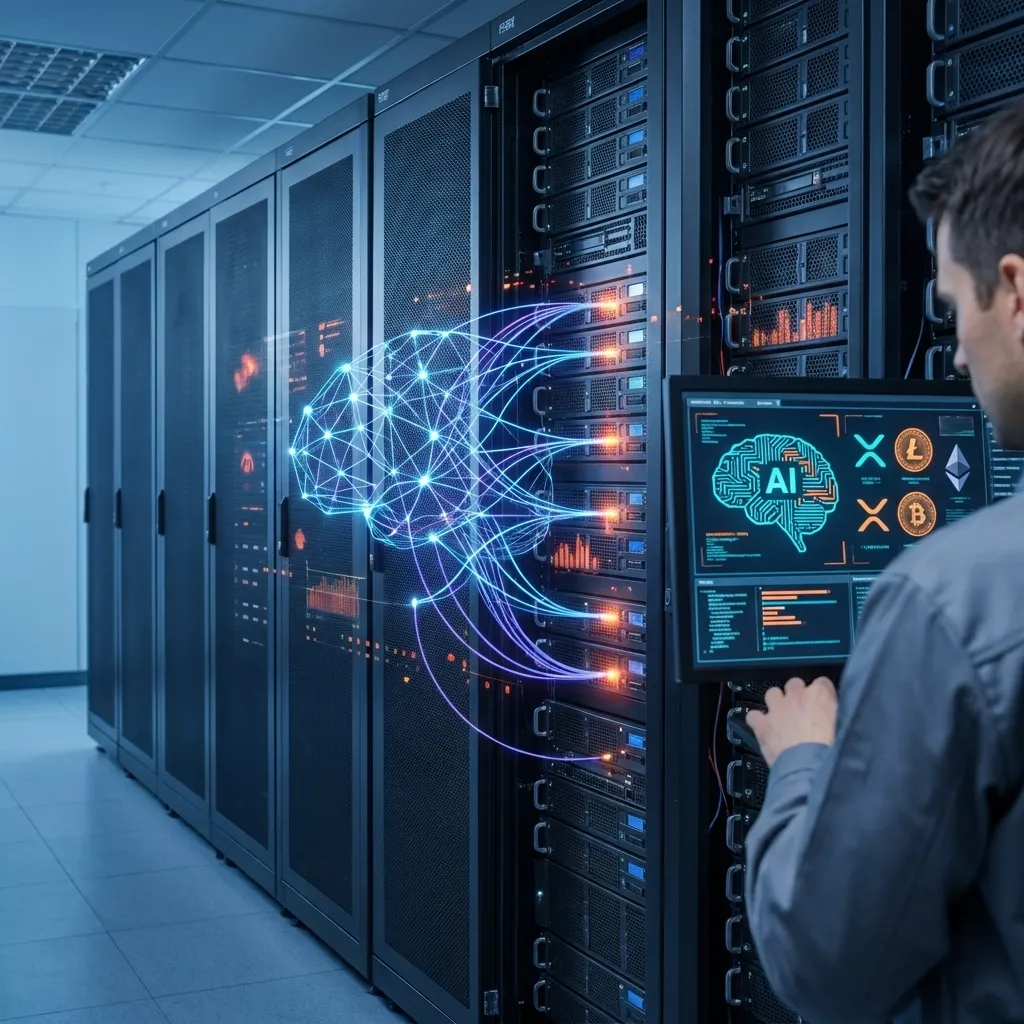
The pursuit of greater profitability in cryptocurrency mining often comes with the challenge of escalating energy consumption and operational costs. However, a new paradigm is emerging with AI crypto mining efficiency, offering a sophisticated solution to these hurdles. By integrating artificial intelligence, miners can move beyond traditional brute-force methods to a more intelligent, optimized approach, significantly impacting both environmental footprint and bottom line.
The cryptocurrency landscape is constantly evolving. Miners face increasing network difficulty and fluctuating market prices. Therefore, optimizing every aspect of a mining operation is crucial for sustained success. Artificial intelligence provides the tools to achieve this optimization. It allows for smarter decision-making and more responsive systems. This shift is not just about incremental gains; it represents a fundamental change in how mining operations are managed.
Understanding the Core Challenges in Crypto Mining
Traditional cryptocurrency mining confronts several significant challenges. High energy consumption is perhaps the most prominent. Mining hardware operates continuously, drawing substantial power. This leads to considerable electricity bills, especially in regions with expensive energy. Furthermore, the carbon footprint associated with such energy use is a growing concern for the industry and regulators alike.
Another major hurdle is the rapid depreciation and wear of mining hardware. GPUs and ASICs run at peak capacity for extended periods. Consequently, they generate significant heat and stress on components. This constant strain shortens their lifespan and necessitates frequent replacements or repairs. These costs add up, eroding potential profits. Moreover, the increasing difficulty of mining algorithms means that older, less efficient hardware quickly becomes obsolete. Staying competitive requires continuous investment and smart management.
Market volatility also presents a challenge. Cryptocurrency prices can fluctuate wildly, affecting the profitability of mining operations overnight. Miners must adapt quickly to these changes. They need to decide which coins to mine, when to sell, and how to adjust their operations to remain profitable. Without advanced tools, these decisions are often reactive and based on historical data, which may not accurately predict future trends. This is where the power of AI can make a substantial difference.
How AI Algorithms Optimize Energy Use
Artificial intelligence brings unparalleled capabilities to managing the dynamic demands of crypto mining. AI algorithms can analyze real-time data on electricity prices, network difficulty, and hardware performance to make instantaneous adjustments. This includes dynamically altering power draw to match fluctuating energy costs or shifting workloads to periods when renewable energy sources are more abundant. For instance, an AI system might detect a dip in electricity prices during off-peak hours and increase mining activity accordingly. Conversely, it could reduce power consumption when prices surge.
Furthermore, AI can predict potential hardware failures. This allows for proactive maintenance rather than reactive repairs, which minimizes downtime and wasted energy. Such predictive power ensures that every watt is utilized as effectively as possible, leading to substantial energy savings. In fact, some studies suggest that AI-driven optimization can reduce energy consumption by up to 15-20% in large-scale mining operations. This directly translates to lower operational costs and a smaller environmental impact. Ultimately, this enhanced energy management contributes significantly to overall AI crypto mining efficiency.
The ability of AI to learn from vast datasets is crucial here. It can identify subtle patterns and correlations that human operators might miss. For example, it can correlate specific temperature fluctuations with impending fan failures. This predictive capability allows for scheduled maintenance, preventing catastrophic breakdowns and ensuring continuous operation. Therefore, AI-driven energy optimization is a cornerstone of modern mining. It makes operations more sustainable.
Enhancing Hardware Performance and Lifespan
Beyond energy optimization, AI also plays a crucial role in extending the life and boosting the performance of mining hardware. By continuously monitoring operational parameters such as temperature, fan speeds, and processing loads, AI systems can prevent overheating and undue stress on components. They can intelligently distribute workloads across a farm, ensuring no single unit is overtaxed while others remain underutilized. This not only maximizes the hash rate output but also mitigates wear and tear, thereby prolonging the operational lifespan of expensive mining equipment. The result is a more sustainable and economically viable mining operation.
Consider a large mining farm with hundreds or thousands of ASICs. Manually monitoring each unit for optimal performance and health is nearly impossible. An AI system, however, can process data from all these units simultaneously. It can identify underperforming rigs, detect potential bottlenecks, and suggest reconfigurations to improve overall output. For example, if one miner is consistently running hotter, the AI could automatically reduce its workload or increase its fan speed. This proactive management prevents hardware degradation. It also maintains a consistent hash rate. This contributes significantly to the overall AI crypto mining efficiency.
Moreover, AI can optimize firmware settings. It can fine-tune voltage and clock speeds for individual chips. This ensures they operate at their most efficient point without compromising stability or lifespan. This level of granular control is beyond human capabilities. It requires sophisticated algorithms that can learn and adapt. Consequently, miners can achieve higher hash rates with the same hardware. They also experience fewer breakdowns. This leads to greater profitability and a better return on investment.
Predictive Maintenance and Anomaly Detection
One of the most impactful applications of AI in mining is predictive maintenance. Instead of waiting for a component to fail, AI models can forecast potential issues before they occur. They analyze historical data from sensors, including temperature, voltage, and error rates. These models learn what constitutes normal operation. Any deviation from this baseline is flagged as an anomaly. This proactive approach saves significant time and money. It prevents unexpected downtime, which can be very costly for miners.
For example, an AI system might detect a gradual increase in the error rate of a specific mining chip. This could indicate an impending failure. The system could then alert operators to replace or repair that chip during a scheduled maintenance window. This prevents a sudden shutdown of the entire rig. Without AI, such a subtle degradation might go unnoticed until it results in a complete failure. This reactive approach is inefficient and expensive. It highlights the value of AI crypto mining efficiency.
Furthermore, anomaly detection extends beyond hardware. AI can monitor network conditions and identify unusual patterns in transaction fees or block times. This allows miners to adjust their strategies in real-time. For instance, if transaction fees for a particular cryptocurrency suddenly spike, an AI could recommend switching to mining that coin temporarily. This dynamic adaptation maximizes revenue. It also showcases the adaptability that AI brings to mining operations. Learn more about AI’s broader applications.
Smart Pool Selection and Algorithm Switching
The profitability of mining also depends heavily on the mining pool and the specific cryptocurrency being mined. AI can analyze real-time market data, including coin prices, network hash rates, and pool fees. It then recommends the most profitable mining pools and cryptocurrencies. This is a complex calculation that changes constantly. Human operators struggle to keep up with these fluctuations.
An AI system can automatically switch between different mining algorithms or cryptocurrencies based on profitability. For example, if Ethereum’s profitability dips below that of another altcoin, the AI could automatically reconfigure the miners to target the more lucrative coin. This dynamic algorithm switching ensures that the mining operation is always generating the maximum possible revenue. It is a critical aspect of achieving high AI crypto mining efficiency.
Moreover, AI can assess the reputation and reliability of various mining pools. It can identify pools with consistent payouts and low orphan block rates. This helps miners avoid less efficient or even fraudulent pools. This intelligent selection process protects a miner’s investment and optimizes their returns. The ability to make such informed decisions instantly provides a significant competitive advantage. It ensures that operations remain agile and responsive to market changes.
The Environmental Impact of AI-Driven Optimization
The environmental footprint of cryptocurrency mining is a significant global concern. High energy consumption often translates to increased carbon emissions, especially when relying on fossil fuel-based electricity. AI-driven optimization offers a powerful solution to mitigate this impact. By maximizing AI crypto mining efficiency, energy waste is reduced, leading to lower overall energy demand.
AI can prioritize the use of renewable energy sources. It can schedule mining activities during periods when solar or wind power generation is at its peak. This reduces reliance on grid electricity, which might be generated from fossil fuels. For instance, a mining farm located near a solar array could increase its operations during sunny hours. It could then scale back when solar output diminishes. This intelligent scheduling makes the mining operation more sustainable. It aligns with global efforts to combat climate change.
Furthermore, by extending the lifespan of hardware, AI reduces the need for frequent manufacturing of new equipment. The production of mining ASICs and GPUs is resource-intensive. It involves rare earth minerals and significant energy. Therefore, extending their operational life contributes to a circular economy. It minimizes electronic waste. This holistic approach to sustainability is a major benefit of integrating AI into crypto mining. It demonstrates a commitment to responsible practices.
Security Enhancements with AI
Beyond efficiency, AI also plays a role in enhancing the security of mining operations. Mining farms are valuable targets for cyberattacks. AI can monitor network traffic and system logs for unusual activity. It can detect potential intrusions or malicious software. For example, if an AI system identifies an unauthorized attempt to modify mining software settings, it can immediately alert administrators or even quarantine the affected system.
AI-powered security systems can learn from past attacks. They can adapt their defenses to evolving threats. This proactive security posture is crucial in the volatile world of cryptocurrency. It protects valuable assets and ensures the integrity of the mining process. The robust security measures provided by AI contribute to the overall stability and reliability of mining operations. This further enhances AI crypto mining efficiency by preventing costly disruptions.
Moreover, AI can help in identifying and preventing sybil attacks on mining pools. These attacks involve a malicious actor creating multiple fake identities to gain disproportionate control. AI algorithms can analyze network behavior and identify patterns indicative of such attacks. This protects the integrity of decentralized networks. It ensures fair participation in mining pools. Consequently, AI acts as a vigilant guardian, safeguarding the ecosystem.
Future Outlook: The Evolution of AI in Crypto Mining
The integration of AI in crypto mining is still in its early stages. However, its potential for future development is immense. We can expect more sophisticated AI models that can anticipate market shifts with even greater accuracy. These models might incorporate macroeconomic indicators and global news sentiment into their predictions. This would provide miners with an unprecedented advantage in decision-making.
Edge AI is another promising area. This involves processing AI algorithms directly on mining hardware, rather than relying on centralized cloud servers. Edge AI could enable even faster, more localized decision-making. It could reduce latency and improve responsiveness. This would allow individual mining rigs to optimize their performance autonomously. This decentralized AI approach could further revolutionize AI crypto mining efficiency.
Furthermore, AI could play a role in optimizing the design of future mining hardware. By simulating various hardware configurations, AI could help engineers design more energy-efficient and powerful ASICs. This iterative design process, guided by AI, could lead to breakthroughs in mining technology. The synergy between AI and hardware innovation will continue to drive the evolution of the crypto mining industry. It promises a future of even greater efficiency and sustainability.
Conclusion
In conclusion, embracing AI in crypto mining is no longer a luxury but a strategic imperative for those looking to stay competitive. The benefits of enhanced energy management, hardware longevity, predictive maintenance, smart pool selection, and robust security contribute to a more efficient, profitable, and environmentally conscious mining ecosystem. The ongoing evolution of AI promises even greater advancements, solidifying AI’s role in the future of digital asset generation. By leveraging AI crypto mining efficiency, miners can navigate the complexities of the market with intelligence and foresight, ensuring long-term success in this dynamic industry. This intelligent approach is key to thriving in the competitive world of cryptocurrency mining. It represents the smart future of digital asset production. Indeed, the path to sustainable and profitable mining is paved with artificial intelligence.
FAQ
How does AI improve energy usage in crypto mining?
AI algorithms analyze real-time data on electricity prices and hardware performance. They dynamically adjust power draw and shift workloads to minimize energy costs. This intelligent management reduces consumption and optimizes resource allocation.
Can AI extend the life of mining hardware?
Yes, AI continuously monitors operational parameters like temperature and processing loads. It prevents overheating and undue stress. This proactive management helps prolong the operational lifespan of expensive mining equipment.
What role does AI play in predictive maintenance for mining rigs?
AI models forecast potential hardware failures by analyzing sensor data. They identify anomalies before they lead to breakdowns. This allows for scheduled maintenance, reducing downtime and preventing costly repairs.
How does AI help with selecting profitable cryptocurrencies to mine?
AI analyzes real-time market data, including coin prices and network hash rates. It recommends the most profitable cryptocurrencies and mining pools. This enables dynamic algorithm switching for maximum revenue.
Is AI integration in crypto mining environmentally friendly?
Absolutely. By optimizing energy usage and extending hardware lifespan, AI reduces the carbon footprint of mining. It also prioritizes renewable energy sources, contributing to a more sustainable and eco-friendly mining ecosystem.
Explore more: More from TrueCryptoNews