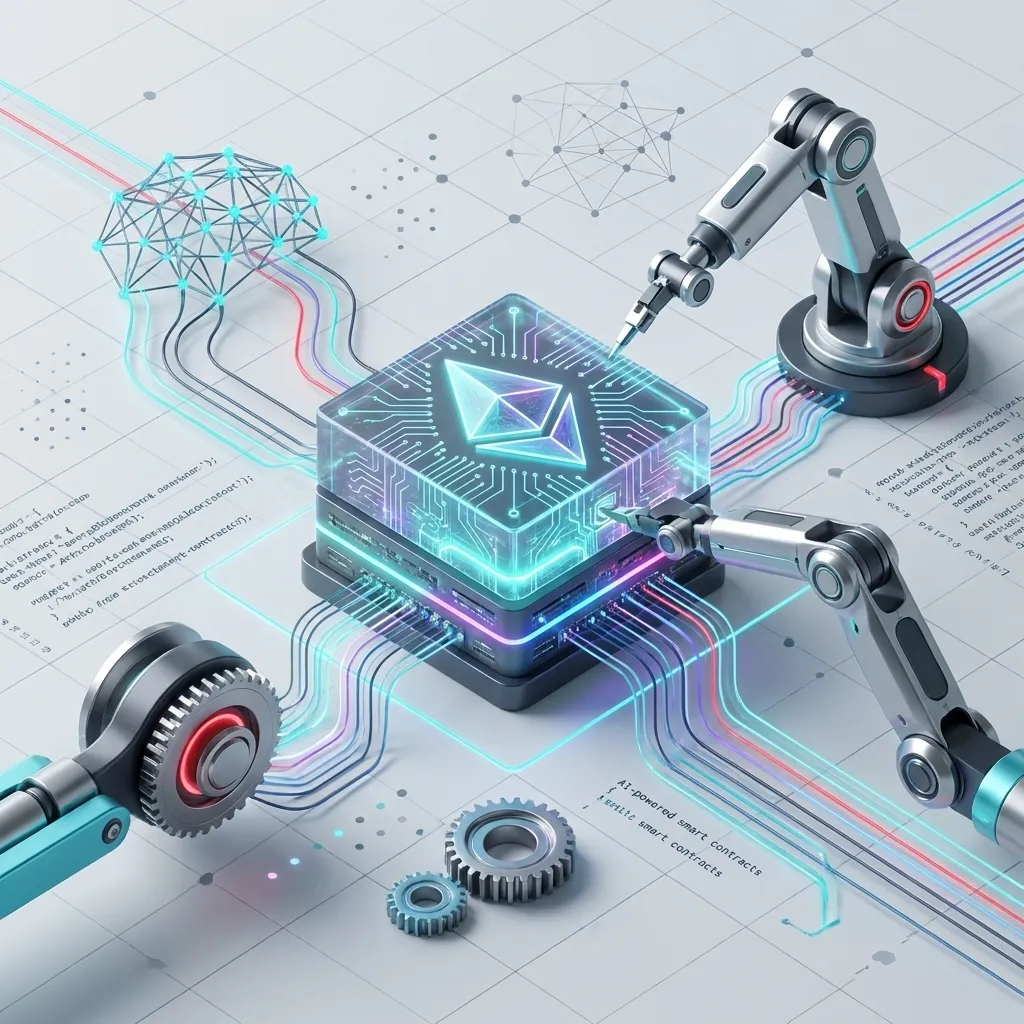
Smart contracts have long served as the foundational technology for decentralized finance (DeFi), facilitating automated, trustless agreements on blockchain networks. Nevertheless, their inherent deterministic nature often restricts their adaptability in response to real-world complexities and fluctuating market conditions. The integration of artificial intelligence (AI) is set to fundamentally alter this paradigm, introducing AI powered smart contracts that are not merely automated but also intelligent, adaptive, and predictive. This significant evolution promises to introduce unprecedented levels of sophistication and efficiency within the DeFi ecosystem.
Understanding this shift requires a look at the current limitations and how AI addresses them. Moreover, it involves recognizing the potential for more dynamic and responsive financial instruments. TrueCryptoNews investigates this exciting development.
The Limitations of Traditional Smart Contracts
Traditional smart contracts operate strictly on predefined rules. Specifically, they follow an ‘if X happens, then Y executes’ logic. While effective for straightforward transactions, this rigidity makes them unsuitable for situations demanding nuanced decision-making, predictive analysis, or the ability to react to unforeseen external variables. For instance, a lending protocol might need to dynamically adjust interest rates based on real-time market volatility and individual borrower risk profiles. These are tasks that extend far beyond the capabilities of a purely rule-based contract.
Consequently, this is where AI becomes crucial. By infusing smart contracts with artificial intelligence, developers can create agreements that learn from data, make informed predictions, and adapt their behavior autonomously. This transition moves beyond simple automation to genuine intelligent automation, capable of managing complex financial instruments, dynamic risk management, and personalized user experiences within DeFi. Furthermore, it opens up new avenues for innovation in financial services.
How AI Enhances Smart Contracts
AI’s contribution to smart contracts can manifest in several key areas. Each area addresses a specific limitation of current systems, thereby enhancing overall functionality and security.
- Predictive Analytics: AI models possess the ability to analyze vast datasets. These include market trends, on-chain activity, and historical performance, to forecast future outcomes. This capability allows intelligent contracts to anticipate events and adjust parameters proactively. For example, they can dynamically set collateral ratios or liquidation thresholds in lending protocols.
- Dynamic Risk Management: Instead of relying on static risk assessments, AI can continuously evaluate and update risk profiles for individual assets or users. This enables smart contracts to execute more sophisticated insurance policies or credit scoring mechanisms. Therefore, risks are managed more effectively in real-time.
- Automated Arbitrage and Trading Strategies: AI can identify and execute profitable arbitrage opportunities across various decentralized exchanges (DEXs) or optimize trading strategies in real-time. This far surpasses human capabilities in terms of speed and analytical depth.
- Fraud Detection: AI algorithms can monitor transaction patterns for anomalies indicative of fraudulent activity. Upon detection, these systems can trigger automated responses to protect users and protocols. This provides a crucial layer of security.
- Adaptive Governance: AI could assist Decentralized Autonomous Organizations (DAOs) by analyzing community sentiment, proposal impacts, and participant engagement. It offers data-driven insights to improve governance processes and decision-making. As a result, DAOs can become more efficient and responsive.
Real-World Applications and Future Prospects of AI Powered Smart Contracts
The implications of AI powered smart contracts extend far beyond theoretical discussions. In practice, these advanced contracts can revolutionize various sectors within the DeFi landscape. For instance, in insurance, AI could enable dynamic premium adjustments based on real-time risk factors, such as a user’s on-chain behavior or external market events. This moves beyond static policies to truly personalized coverage. Furthermore, it could automate claim processing with greater accuracy.
Consider the realm of lending. With AI integration, a lending protocol could offer variable interest rates that automatically adjust based on a borrower’s credit score, which is dynamically calculated from their transaction history and market conditions. This creates a more equitable and efficient lending environment. Similarly, in asset management, AI-driven smart contracts could autonomously rebalance portfolios, optimizing for returns and managing risk based on predictive market analytics. This level of automation and intelligence was previously unattainable.
Moreover, AI can play a pivotal role in enhancing the security of decentralized applications. By continuously monitoring network activity and identifying potential vulnerabilities or malicious patterns, AI algorithms can trigger automatic safeguards. This includes pausing suspicious transactions or isolating compromised contracts. Consequently, the overall integrity of the DeFi ecosystem is significantly bolstered.
Challenges and Considerations for Intelligent Contracts
Despite the immense potential, the path to widespread adoption of AI-infused smart contracts is not without its hurdles. One primary challenge involves the
Explore more: More from TrueCryptoNews