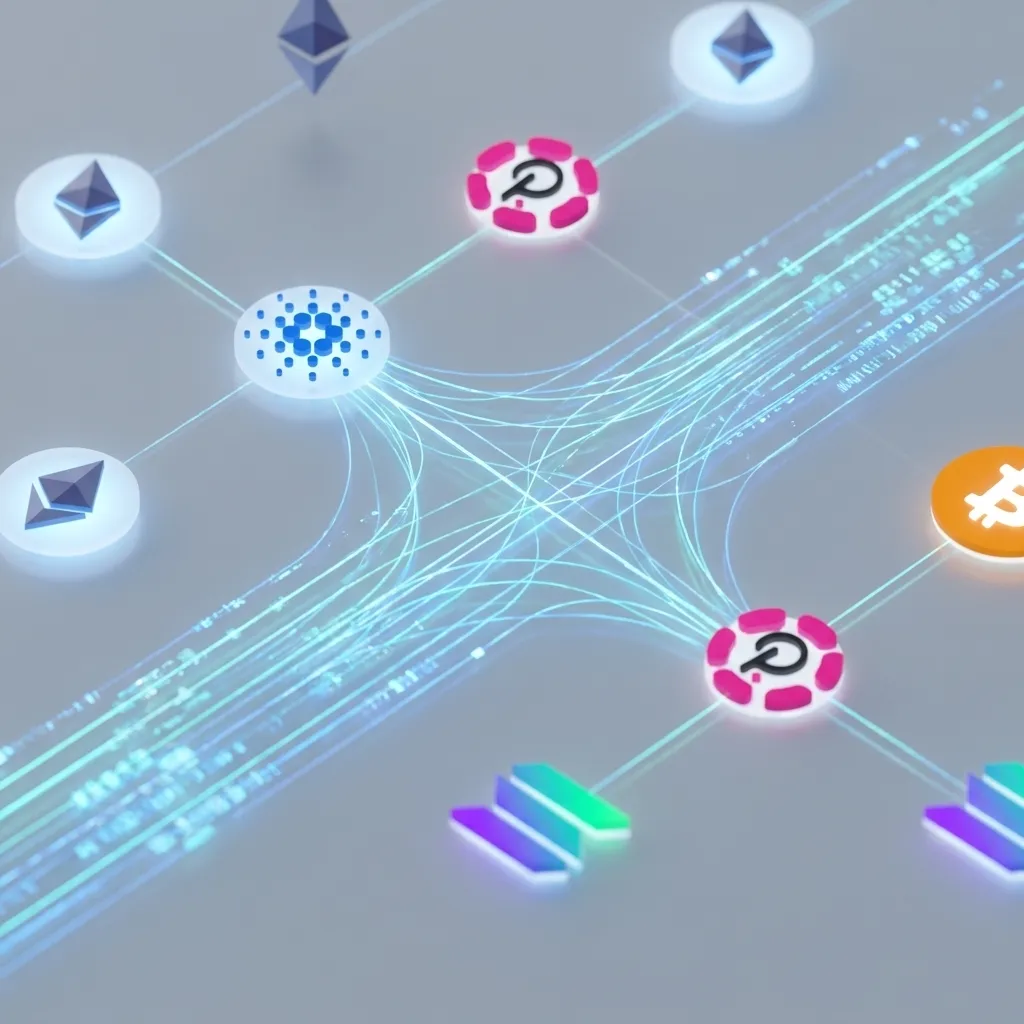
The blockchain landscape is a vibrant but fragmented ecosystem, with countless individual networks, each operating with its own rules and assets. This isolation creates significant barriers to efficiency and mainstream adoption. The Blockchain Interoperability Future is the vision of a seamlessly connected network where different blockchains can communicate, share data, and transfer assets without friction. Achieving true interoperability is not just a technical challenge; it’s a fundamental requirement for the crypto economy to realize its full potential, enabling a more integrated and powerful decentralized web.
Understanding this evolving landscape is crucial for investors and developers alike. The ability for diverse blockchain networks to interact seamlessly promises to revolutionize how digital assets are used and managed. Consequently, this transformation will foster greater innovation across decentralized finance (DeFi) and other Web3 applications. Furthermore, it addresses critical issues such as liquidity fragmentation and user experience, which currently hinder broader adoption.
Current Solutions for the Blockchain Interoperability Future
Several innovative approaches are paving the way for a more interconnected Blockchain Interoperability Future. Cross-chain bridges are currently the most common method, allowing assets and data to move between two distinct blockchains. While effective, bridges can introduce security risks and centralization points. Therefore, ongoing advancements in bridge technology focus on mitigating these vulnerabilities. Another approach involves ‘polkadot-like’ parachains or Cosmos’s Inter-Blockchain Communication (IBC) protocol, which are designed to create interconnected networks of specialized blockchains that can natively communicate. These protocols aim to build a ‘network of networks,’ allowing for more secure and efficient asset transfers and data sharing across diverse ecosystems. Furthermore, general message passing protocols are emerging, which enable smart contracts on one chain to call functions on another, opening up new possibilities for complex cross-chain dApps. Notably, these solutions often involve sophisticated cryptographic techniques to ensure data integrity and security.
For instance, wrapped assets are another form of interoperability, where a token from one blockchain is ‘wrapped’ into a new token on another chain, maintaining its value. This method, however, often relies on centralized custodians, posing trust concerns. Conversely, atomic swaps allow for direct peer-to-peer exchange of cryptocurrencies across different blockchains without intermediaries. This method offers enhanced security but typically requires both parties to be online simultaneously and has limitations in terms of complexity and asset types. Each solution presents its own set of trade-offs regarding security, decentralization, and efficiency. Consequently, the ongoing research and development in this area are vital for shaping the ultimate form of a truly interconnected digital asset space.
The Promise of a Connected Crypto Ecosystem
The implications of a fully realized Blockchain Interoperability Future are vast. It would allow for greater liquidity, as assets could move freely between different DeFi protocols, regardless of their native chain. Users would experience enhanced flexibility, able to utilize the best features of various blockchains without being locked into one. Developers could build more complex and powerful applications that draw upon the strengths of multiple networks, fostering innovation. Imagine a scenario where a stablecoin on Ethereum could instantly be used as collateral on a Solana lending platform, or an NFT minted on Flow could be traded on an Avalanche marketplace. This level of seamless interaction is essential for attracting a broader user base and integrating blockchain technology into everyday life, moving beyond siloed digital economies. Moreover, this connectivity could significantly reduce transaction costs and improve transaction speeds across the ecosystem.
This unified environment would also facilitate the development of more robust decentralized autonomous organizations (DAOs) and other governance models. By enabling cross-chain governance, decisions could impact a wider range of protocols and assets, reflecting a more comprehensive community consensus. Furthermore, the convergence of blockchain with artificial intelligence could see AI models operating across different chains, accessing diverse data sets and executing complex strategies. For insights into how AI already influences digital asset management, consider exploring Beyond the Charts: How AI Crypto Trading Strategies Drive Market Edge. Such integration promises to accelerate the evolution of decentralized applications. Therefore, the drive towards greater interoperability is not just about technical efficiency but also about expanding the scope and utility of the entire Web3 paradigm.
Challenges and Roadblocks to Interoperability
Despite the immense potential, achieving the ideal Blockchain Interoperability Future faces significant hurdles. One primary challenge is security. Cross-chain bridges, while effective, have been frequent targets for hackers, leading to substantial losses. Protecting assets moving between disparate security models requires robust cryptographic solutions and vigilant auditing. Furthermore, maintaining consistent security standards across a multitude of chains presents a complex problem. Another major challenge is standardization. Different blockchains often have unique data structures, consensus mechanisms, and smart contract languages. Creating universal standards that allow for seamless communication without compromising the unique strengths of each chain is a formidable task. This lack of standardization can impede the smooth flow of information and value.
Moreover, scalability remains a concern. As more chains connect and transaction volumes increase, the underlying infrastructure must be able to handle the load efficiently. Without scalable solutions, interoperability could inadvertently lead to network congestion and higher fees. Governance is also a critical aspect; establishing fair and decentralized governance models for cross-chain protocols is essential to prevent centralization risks. Additionally, regulatory uncertainty adds another layer of complexity. As highlighted in discussions around AI Crypto Regulation: Navigating the Evolving Landscape, differing legal frameworks across jurisdictions can complicate the development and deployment of interoperable solutions. Addressing these challenges requires collaborative efforts from developers, researchers, and policymakers globally. Overcoming these obstacles is paramount for realizing a truly cohesive and secure blockchain ecosystem.
Emerging Technologies Propelling Interoperability
The journey towards a robust Blockchain Interoperability Future is being accelerated by several cutting-edge technologies. Zero-Knowledge Proofs (ZKPs), for instance, are gaining traction for their ability to verify transactions and data across chains without revealing sensitive information. This enhances privacy and security, which are critical for cross-chain interactions. Similarly, optimistic rollups and ZK-rollups, primarily used for scaling layer-2 solutions, also hold promise for facilitating more efficient cross-chain communication by bundling transactions off-chain and then submitting a single proof to the main chain. These scaling solutions indirectly contribute to interoperability by making the underlying chains more performant and capable of handling increased cross-chain traffic.
Another significant development involves multi-party computation (MPC), which allows multiple parties to jointly compute a function over their inputs while keeping those inputs private. This technology can be applied to secure cross-chain transactions and asset management, reducing reliance on single points of failure. Furthermore, advancements in sharding, as seen in Ethereum 2.0, aim to improve the overall capacity and speed of individual blockchains, thereby making them more amenable to interoperable solutions. The ongoing research into Decentralized AI Networks: Powering Web3’s Next Evolution also suggests a future where AI agents could play a role in optimizing cross-chain routing and security protocols. These technological breakthroughs are not just incremental improvements; they represent fundamental shifts that could redefine the very architecture of the decentralized web, leading towards a more integrated and efficient digital economy.
The Role of Standards and Protocols in Interoperability
Standardization is a cornerstone of achieving the Blockchain Interoperability Future. Just as the internet relies on protocols like TCP/IP, the blockchain ecosystem needs common standards for data exchange and asset transfer. Projects like the Inter-Blockchain Communication (IBC) protocol from Cosmos are prime examples, providing a standardized method for independent blockchains to communicate and transfer value. This protocol defines a set of rules for data packets, ensuring that different chains can understand and process information from one another. Similarly, the development of universal asset standards, such as ERC-721 for NFTs or ERC-20 for fungible tokens, has already facilitated a degree of interoperability within specific blockchain ecosystems. Extending these standards, or creating new meta-standards, for cross-chain compatibility is a crucial step.
Moreover, the adoption of common APIs (Application Programming Interfaces) for blockchain interactions can significantly streamline the development of cross-chain applications. This would allow developers to build dApps that can interact with multiple blockchains using a consistent interface, reducing complexity and development time. The World Wide Web Consortium (W3C) has also initiated efforts towards blockchain-related standards, indicating a growing recognition of the need for global cooperation. As the industry matures, the collaborative development and widespread adoption of these standards will be instrumental in building a truly cohesive and functional multi-chain environment. Without agreed-upon frameworks, the ecosystem risks remaining fragmented, hindering its full potential. The development of robust protocols and adherence to community-driven standards are therefore indispensable components of this ongoing evolution.
Impact on DeFi and Web3 Applications
The realization of a true Blockchain Interoperability Future holds transformative potential for decentralized finance (DeFi) and Web3 applications. Interoperability will dramatically increase liquidity across the entire crypto market. Users will no longer be confined to specific chains for their assets, allowing them to access the best interest rates, lending platforms, and trading opportunities regardless of where their assets originated. This increased liquidity will lead to more efficient markets and potentially lower transaction costs for users. Furthermore, it will foster a more competitive environment among DeFi protocols, driving innovation as projects vie to offer the most attractive services. For example, a user holding assets on one chain could seamlessly participate in a yield farming strategy on another, optimizing their returns without complex manual bridging processes. The impact on DeFi is profound, creating a more fluid and accessible financial landscape.
For Web3 applications, interoperability enables the creation of truly composable and modular dApps. Developers will be able to pick and choose the best components from different blockchains – perhaps using one chain for its high throughput, another for its robust security, and a third for its specialized data storage capabilities. This modularity will accelerate development, allowing for the creation of more sophisticated and resilient applications. Imagine a decentralized social media platform where user identities are managed on one chain, content storage on another, and tokenized rewards on a third, all seamlessly integrated. This level of integration is critical for the mass adoption of Web3, moving beyond niche applications to become a foundational layer for the next generation of the internet. The discussion around AI Impact DeFi Web3: Shaping the Future of Financial Protocols further underscores how interconnected systems will drive innovation, allowing AI to operate across diverse blockchain environments. This synergy will undoubtedly expand the capabilities and reach of decentralized technologies significantly.
The Long-Term Vision: A Unified Digital Economy
The ultimate vision of the Blockchain Interoperability Future extends beyond merely connecting different chains; it aims to create a unified global digital economy. This future envisions a world where digital assets and data flow freely and securely across various blockchain networks, traditional financial systems, and even real-world applications. Such an economy would break down existing silos, enabling unprecedented levels of collaboration and innovation. For instance, supply chains could track goods from production to consumption across multiple national borders, with each stage recorded on different, specialized blockchains that communicate effortlessly. This would enhance transparency, efficiency, and trust throughout complex global networks. Moreover, digital identities and credentials could be managed and verified across diverse platforms and jurisdictions, simplifying online interactions and enhancing personal data sovereignty.
This unified digital economy would also facilitate the seamless integration of central bank digital currencies (CBDCs) with existing decentralized protocols, fostering a hybrid financial system. The ability to move value between these different paradigms without friction is crucial for broad economic participation. Furthermore, the convergence of AI with such an interoperable blockchain ecosystem could lead to highly autonomous and intelligent systems that manage and optimize resources on a global scale. Consider the insights from AI Crypto Investment Opportunities: Navigating the Future of Finance 2024 & Beyond, which highlights the increasing sophistication of automated financial strategies. This comprehensive connectivity will not only benefit financial transactions but also impact areas like healthcare, intellectual property, and governance. The long-term impact is a more inclusive, efficient, and resilient global economic infrastructure, powered by distributed ledger technology. This truly integrated future promises to reshape how we interact with digital assets and information on a fundamental level.
Conclusion
The journey to complete blockchain interoperability is ongoing, yet the advancements being made are critical for evolving the fragmented crypto space into a unified, powerful, and truly global digital economy. The vision of a seamlessly connected ecosystem, where different blockchains communicate, share data, and transfer assets without friction, is rapidly approaching reality. From cross-chain bridges and specialized protocols to the emerging power of zero-knowledge proofs and multi-party computation, the technological foundation for a cohesive network of networks is being laid. This transformation promises to unlock unparalleled liquidity, flexibility, and innovation across DeFi and Web3 applications. While challenges like security and standardization persist, the collective effort of developers and researchers continues to push the boundaries. The Blockchain Interoperability Future is not merely a technical aspiration; it is an essential step towards realizing the full potential of decentralized technology and fostering a more integrated and powerful digital world.
FAQ
What does blockchain interoperability mean?
Blockchain interoperability refers to the ability of different blockchain networks to communicate, share data, and transfer assets with each other seamlessly. This allows for a more connected and efficient decentralized ecosystem.
Why is connecting crypto ecosystems important?
Connecting crypto ecosystems is crucial because it enhances liquidity, improves user experience, and enables developers to build more complex and powerful decentralized applications (dApps). It breaks down silos and fosters innovation across the digital asset landscape.
What are some current solutions for cross-chain communication?
Current solutions include cross-chain bridges, which facilitate asset and data transfer between two chains; specialized protocols like Cosmos’s IBC and Polkadot’s parachains, designed for interconnected networks; and general message passing protocols that allow smart contracts to interact across chains.
What are the main challenges to achieving a unified blockchain network?
Key challenges include ensuring security across disparate networks, standardizing data formats and communication protocols, managing scalability as transaction volumes increase, and establishing fair decentralized governance models for cross-chain solutions.
How will a connected blockchain environment impact DeFi?
A connected blockchain environment will significantly boost DeFi by increasing liquidity, enabling users to access a wider range of financial services across different chains, and fostering greater innovation as protocols become more composable. It will lead to more efficient and accessible decentralized financial markets.
External Links:
- https://www.ibm.com/blogs/research/2023/11/blockchain-interoperability/
- https://ethereum.org/en/developers/docs/cross-chain-bridges/