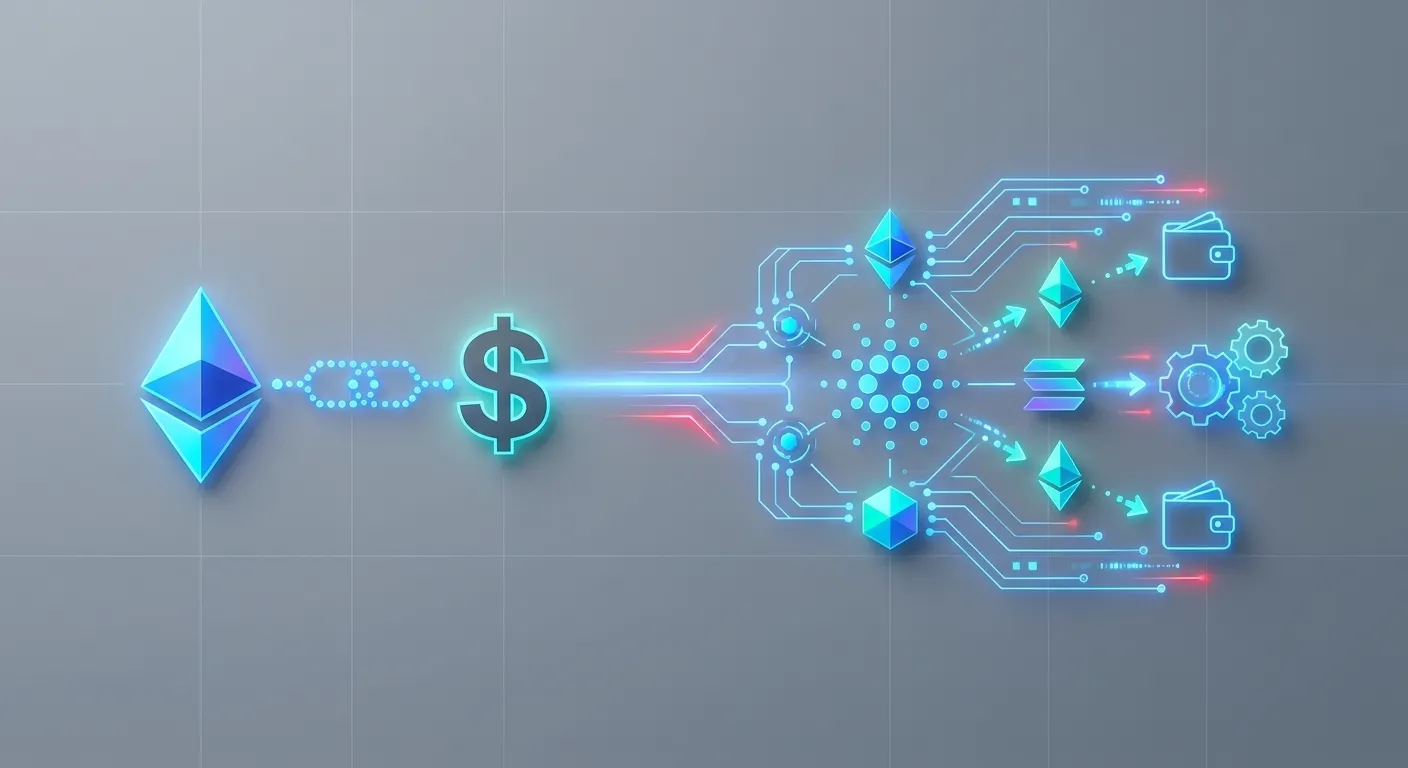
Stablecoins have become a cornerstone of the cryptocurrency market, offering stability in an often-volatile landscape. Initially conceived primarily as a bridge between fiat currency and crypto, providing a stable store of value, their evolution is rapidly transforming them into programmable money. This shift is critical for the broader adoption of decentralized finance (DeFi) and for the Stablecoins Programmable Money future. Understanding this transition from simple price pegs to sophisticated, logic-driven digital assets is key to grasping the next wave of financial innovation.
Historically, cryptocurrencies have been known for their significant price fluctuations. Consequently, stablecoins emerged to mitigate this volatility, providing a reliable medium of exchange and a stable store of value within the digital asset ecosystem. Early stablecoins, such as Tether (USDT) and USD Coin (USDC), primarily relied on fiat collateral, meaning each digital token was backed by an equivalent amount of traditional currency held in reserve. This model provided a straightforward mechanism for maintaining a stable peg, offering users a sense of security and predictability. However, as the cryptocurrency market matured, the need for more sophisticated and decentralized solutions became apparent.
The journey of stablecoins reflects the broader innovation within blockchain technology. From centralized fiat-backed models, the industry progressed to crypto-collateralized stablecoins like MakerDAO’s DAI. In this model, DAI is backed by a basket of other cryptocurrencies, locked in smart contracts. This approach introduced a greater degree of decentralization, reducing reliance on traditional financial institutions. Later, algorithmic stablecoins emerged, attempting to maintain their peg through complex algorithms and economic incentives, though some of these experiments faced significant challenges, highlighting the complexities of decentralized stability mechanisms. Nevertheless, each iteration has pushed the boundaries of what stablecoins can achieve, setting the stage for their next major transformation.
From Pegging Mechanisms to Programmable Money
The foundational utility of stablecoins lies in their pegging mechanisms, which ensure their value remains constant relative to a reserve asset, typically the US dollar. Early stablecoins were primarily collateralized by fiat reserves, while later iterations introduced crypto-collateralization (e.g., DAI) and algorithmic approaches. However, the true innovation unfolding now is the transition towards Stablecoins Programmable Money. This means stablecoins are no longer just static tokens; they can be embedded with smart contract logic that dictates how and when they can be used. Imagine stablecoins that automatically pay out dividends, expire after a certain date, or are only spendable within specific predefined conditions, directly coded into the token itself. This programmability opens up vast possibilities for automated financial services, supply chain management, and even enhanced regulatory compliance.
Specifically, the integration of smart contracts transforms stablecoins from inert tokens into dynamic, intelligent assets. This fundamental shift allows for a myriad of use cases previously unimaginable with traditional fiat or even early cryptocurrencies. For example, a stablecoin could be programmed to release funds incrementally upon the verification of project milestones, ensuring accountability in large-scale ventures. Furthermore, conditional payments based on external data feeds, known as oracles, could automate complex escrow services, reducing friction and the need for intermediaries. This level of automation is particularly valuable in cross-border transactions, where delays and costs often present significant hurdles.
The concept of programmable money also extends to enhanced financial inclusion. Consider micro-loans or grants distributed via programmable stablecoins. These funds could be programmed to be spent only on specific goods or services, for instance, agricultural supplies or educational materials, ensuring the intended use of funds and reducing misuse. Moreover, the inherent transparency of blockchain technology, combined with programmed conditions, could significantly improve the efficiency and accountability of aid distribution, especially in humanitarian efforts. Therefore, the implications for societal impact are substantial, moving beyond mere financial transactions to address broader economic challenges.
The evolution from simple pegging to programmable functionality is not without its challenges. Technical complexities in smart contract development, potential vulnerabilities to exploits, and the need for robust auditing processes are significant considerations. Additionally, the regulatory landscape for Stablecoins Programmable Money is still developing. Jurisdictions globally are grappling with how to classify and oversee these innovative assets, balancing the need for consumer protection with fostering innovation. Nevertheless, the potential benefits often outweigh these hurdles, driving continued research and development in this exciting field. For insights into the broader regulatory environment, consider exploring our article on AI Crypto Regulation: Navigating the Evolving Legal Landscape.
The Mechanics of Programmable Stablecoins
Understanding how Stablecoins Programmable Money functions requires a grasp of smart contracts. Smart contracts are self-executing agreements with the terms of the agreement directly written into lines of code. They run on a blockchain, meaning they are immutable and transparent. When a stablecoin is made programmable, its underlying smart contract is enhanced with additional logic. This logic dictates specific conditions under which the stablecoin can be transferred, held, or utilized. Consequently, this allows for a new dimension of control and automation over digital assets.
For instance, a developer might create a programmable stablecoin designed for corporate payroll. The smart contract could be configured to automatically distribute salaries to employees on a specific date each month, directly from the company’s treasury. Moreover, it could include conditions for bonuses based on performance metrics, automatically triggered once those metrics are met and verified by an oracle. This eliminates manual processing, reduces human error, and ensures timely payments. Such systems are already being explored in various industries, demonstrating the practical utility of this technology.
Another compelling application lies in the realm of decentralized autonomous organizations (DAOs). DAOs often manage significant treasuries in stablecoins. With programmable stablecoins, DAOs could implement complex governance mechanisms, where funds are released only after a certain number of votes are cast, or specific proposals are approved. This adds an extra layer of security and automation to decentralized governance, streamlining operations and enhancing transparency. Indeed, the ability to embed rules directly into the currency itself represents a paradigm shift in financial architecture.
Furthermore, the security implications of programmable stablecoins are noteworthy. While smart contracts introduce new attack vectors, they also offer opportunities for enhanced security features. For example, a stablecoin could be programmed with multi-signature requirements for transactions exceeding a certain amount, or even include built-in time locks that prevent immediate transfers, allowing for fraud detection. These features contribute to a more robust and secure digital financial ecosystem. However, it is crucial to follow Best Practices for Securing AI dApps to mitigate risks effectively.
The underlying technology enabling this programmability is often built on robust blockchain platforms like Ethereum, which supports complex smart contract functionality. Other platforms are also emerging, offering specialized features for programmable assets. As these technologies mature, the capabilities of Stablecoins Programmable Money will continue to expand, offering ever more intricate and powerful financial tools to users and institutions alike. The ongoing development of these platforms is a key factor in the widespread adoption of programmable stablecoins.
Impact of Stablecoins Programmable Money on DeFi and Beyond
The rise of Stablecoins Programmable Money has profound implications for DeFi and the global financial system. In DeFi, it enables more sophisticated lending protocols, automated yield strategies, and granular control over digital assets. For instance, a stablecoin could be programmed to automatically release funds upon the completion of a specific task or to disburse payments to multiple recipients based on pre-set conditions. Beyond DeFi, programmable stablecoins could revolutionize remittances, micro-payments, and even aid distribution, allowing for greater transparency and efficiency. While challenges around privacy, regulatory oversight, and technical complexity remain, the potential for these intelligent digital currencies to streamline financial operations and create entirely new business models is immense. This evolution marks a significant step towards a more automated and efficient global financial infrastructure.
Within decentralized finance, programmable stablecoins can significantly enhance liquidity provision and risk management. Consider automated market makers (AMMs) that utilize these assets. A programmable stablecoin could be designed to automatically adjust its allocation within a liquidity pool based on market conditions or predefined risk parameters, optimizing returns for liquidity providers while minimizing impermanent loss. Similarly, lending platforms could implement more dynamic interest rate models, where rates automatically adjust based on supply and demand, facilitated by the inherent programmability of the stablecoins involved. This offers a more responsive and efficient capital market.
Beyond the confines of DeFi, the potential applications are vast. In traditional finance, programmable stablecoins could streamline corporate treasury management. Companies could programmatically manage their cash flows, automating everything from vendor payments to dividend distributions. This reduces operational costs and improves financial forecasting accuracy. Moreover, international trade could be revolutionized by smart contracts linked to programmable stablecoins. Payments could be automatically released upon the verifiable delivery of goods, reducing disputes and accelerating settlement times across borders. This fosters greater trust and efficiency in global commerce.
Furthermore, the integration of AI with programmable stablecoins presents exciting new frontiers. Imagine AI algorithms that manage vast portfolios of programmable stablecoins, optimizing their deployment across various DeFi protocols based on predictive analytics and real-time market data. This could lead to highly efficient and adaptive financial strategies, further enhancing the capabilities of autonomous financial systems. For more on this convergence, see our article on AI Impact DeFi Web3: Shaping the Future of Financial Protocols.
The impact on central bank digital currencies (CBDCs) is also a critical area. Many central banks are exploring or developing their own digital currencies, and the concept of programmability is a key feature being considered. A programmable CBDC could enable governments to implement highly targeted fiscal policies, such as stimulus payments that are only spendable on essential goods or within a specific timeframe. This level of control and precision is unprecedented in traditional monetary systems, offering powerful tools for economic management. Indeed, the lessons learned from the development of private Stablecoins Programmable Money will undoubtedly inform the design of future CBDCs.
Challenges and Opportunities for Programmable Stablecoins
Despite the immense potential of Stablecoins Programmable Money, several challenges must be addressed for widespread adoption. Regulatory clarity remains a significant hurdle. Governments worldwide are still developing frameworks for stablecoins in general, and the added layer of programmability introduces new complexities. Issues such as consumer protection, anti-money laundering (AML), and know-your-customer (KYC) compliance need robust solutions that can integrate with programmable features. Achieving a balance between innovation and regulatory oversight is crucial for fostering trust and preventing illicit activities.
Technological complexity also poses a challenge. Developing secure and efficient smart contracts for programmable stablecoins requires specialized expertise. Bugs or vulnerabilities in the code can lead to significant financial losses, as demonstrated by numerous incidents in the DeFi space. Consequently, robust auditing, formal verification, and continuous security monitoring are essential practices. The interoperability of programmable stablecoins across different blockchain networks is another area requiring further development. Seamless transfer and interaction between various ecosystems will be vital for maximizing their utility.
User experience is another factor. While the underlying technology is powerful, the end-user experience needs to be intuitive and accessible for mass adoption. Abstracting away the complexities of smart contracts and blockchain interactions will be key to attracting a broader audience beyond crypto enthusiasts. Simplified interfaces, clear explanations of programmable features, and reliable infrastructure are necessary to make Stablecoins Programmable Money a practical tool for everyday use. This focus on user-friendliness will drive significant growth.
However, these challenges also present significant opportunities. The demand for regulatory-compliant programmable stablecoins is growing, creating a market for specialized legal and technical solutions. Companies that can bridge the gap between regulatory requirements and technological innovation will likely thrive. Furthermore, the development of more user-friendly platforms and tools for creating and managing programmable stablecoins will empower a new generation of developers and businesses. This fosters a vibrant ecosystem of innovation.
The potential for new business models is enormous. Programmable stablecoins can enable a wide array of services that are currently inefficient or impossible with traditional financial instruments. From dynamic loyalty programs to automated royalty distributions for content creators, the possibilities are only just beginning to be explored. As the technology matures and regulatory environments become clearer, we can expect to see an explosion of innovative applications leveraging the power of Stablecoins Programmable Money. For further reading on investment opportunities in this evolving space, consider our analysis on AI Crypto Investment Opportunities: Navigating the Future of Finance 2024 & Beyond.
The Future Landscape of Digital Finance
The trajectory of stablecoins is clear: they are evolving into highly versatile, intelligent digital assets. This transformation from simple price-pegged tokens to instruments capable of executing complex logic is fundamental. It signals a move towards a financial system where money itself can carry instructions, automate processes, and adapt to specific conditions. Therefore, the long-term implications for global finance are profound, promising greater efficiency, transparency, and accessibility. This is not merely an incremental improvement; it represents a foundational shift in how value is exchanged and managed.
Looking ahead, we can anticipate a convergence of programmable stablecoins with other cutting-edge technologies. Artificial intelligence, for example, could play a crucial role in optimizing the programming of these stablecoins, predicting market trends, and even autonomously managing their deployment in complex financial strategies. Imagine AI-powered stablecoin treasuries that dynamically rebalance their assets to maximize yield or minimize risk, all without human intervention. This synergy between AI and programmable money will unlock unprecedented levels of financial automation and sophistication. Indeed, the potential for intelligent agents to interact with Stablecoins Programmable Money is a fascinating prospect.
Moreover, the integration of programmable stablecoins with the Internet of Things (IoT) could create entirely new economic paradigms. Smart devices could autonomously conduct transactions using programmed stablecoins, paying for services or resources as needed. For example, a smart car could pay for its own charging or parking fees using a stablecoin programmed to release funds under specific conditions. This creates a seamlessly integrated digital economy where financial transactions are embedded into the fabric of our physical world, further blurring the lines between digital and physical assets. To understand the foundational elements of such integrations, exploring concepts like Decentralized AI Growth Web3 becomes essential.
The role of central banks and traditional financial institutions will also adapt to this evolving landscape. While private programmable stablecoins continue to innovate, central banks are actively exploring their own digital currencies. These CBDCs are likely to incorporate programmability, offering governments and monetary authorities new tools for economic management and policy implementation. Consequently, the competition and collaboration between private and public programmable digital currencies will shape the future of global monetary systems, creating a diverse and dynamic financial ecosystem. This ongoing development indicates a clear path towards a more digitized and intelligent financial future.
In conclusion, stablecoins are moving far beyond their initial role as simple pegs. Their development into programmable money is a pivotal trend, poised to reshape how we interact with digital assets and financial services. This evolution from static value stores to dynamic, intelligent instruments represents a significant leap forward in the digital asset space. While challenges remain, the opportunities presented by Stablecoins Programmable Money for innovation across DeFi, traditional finance, and beyond are immense. As this technology matures, we can expect a more automated, efficient, and interconnected global financial infrastructure to emerge. The journey of stablecoins is far from over; in fact, it is just beginning its most exciting chapter as they become truly programmable assets. Learn more about the potential of programmable money from authoritative sources like the Bank for International Settlements or the Federal Reserve.
FAQ
What is the primary difference between traditional stablecoins and programmable stablecoins?
Traditional stablecoins primarily aim to maintain a stable value against a fiat currency or other asset. Conversely, programmable stablecoins embed smart contract logic, enabling them to execute predefined conditions or actions automatically, such as conditional payments or expiry dates, making them dynamic and intelligent assets.
How do programmable stablecoins enhance decentralized finance (DeFi)?
Programmable stablecoins significantly enhance DeFi by enabling more sophisticated financial instruments. For instance, they facilitate automated lending protocols, dynamic yield strategies, and granular control over digital assets, leading to greater efficiency and innovation in decentralized financial services.
What are some real-world applications of stablecoins with embedded logic?
Real-world applications include automated payroll systems, transparent aid distribution where funds are spent only on specific goods, conditional payments in supply chain management, and enhanced governance mechanisms for decentralized autonomous organizations (DAOs). These applications streamline processes and improve accountability.
What challenges do programmable digital currencies face?
Programmable digital currencies face challenges such as regulatory uncertainty, technical complexities in smart contract development and security, and the need for improved user experience. Addressing these issues is crucial for their widespread adoption and integration into mainstream finance.
How might artificial intelligence interact with programmable digital money in the future?
Artificial intelligence could interact with programmable digital money by optimizing its programming, predicting market trends for strategic deployment, and autonomously managing portfolios. This synergy could lead to highly efficient and adaptive financial strategies, further automating and enhancing financial systems.