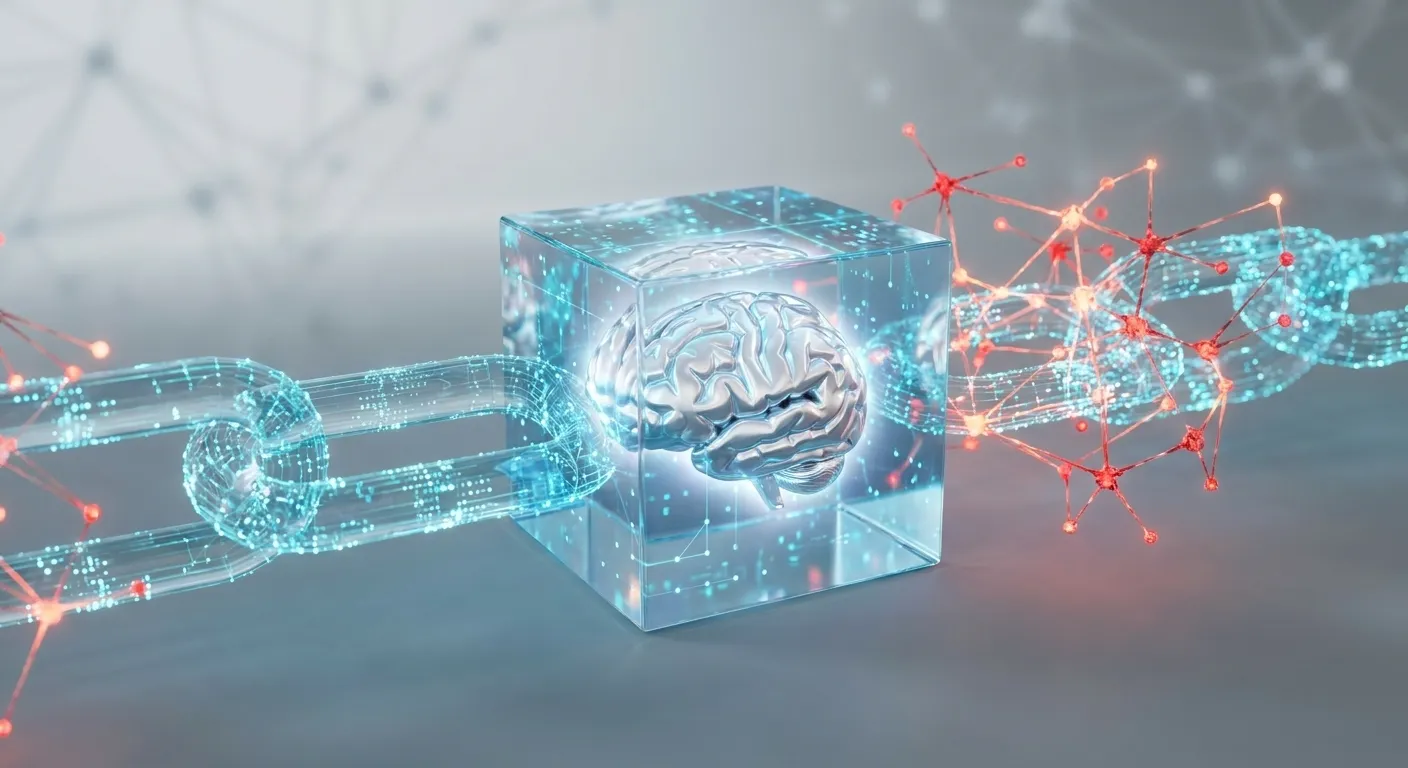
The integration of artificial intelligence into the blockchain ecosystem is no longer a futuristic concept but a present reality shaping the digital asset landscape. For crypto investors and enthusiasts, understanding AI in blockchain basics is crucial to navigating this evolving market. This foundational guide from TrueCryptoNews will break down how AI and blockchain converge, offering clarity on their symbiotic relationship and practical applications.
The Nexus of AI and Blockchain: Why It Matters
At its core, blockchain provides a decentralized, immutable ledger. Meanwhile, AI offers advanced analytical capabilities and decision-making power. When combined, these technologies create robust systems. Consequently, they enhance security, efficiency, and intelligence across various crypto applications. AI can process vast amounts of on-chain data, identify patterns, and predict market movements. Furthermore, blockchain can provide a secure, transparent, and tamper-proof infrastructure for AI models and their data.
Machine Learning Applications in Crypto
Machine learning (ML), a subset of AI, is perhaps the most direct application within the crypto space. ML algorithms can be trained on historical market data. This helps identify trends, predict price fluctuations, and even detect fraudulent activities. Consider these key applications:
- Predictive Analytics for Market Trends: ML models analyze trading volumes, social media sentiment, and macroeconomic indicators. They forecast potential price shifts for cryptocurrencies. This provides investors with data-driven insights beyond traditional technical analysis.
- Automated Trading Bots: AI-powered algorithms execute trades based on predefined strategies and real-time market conditions. They often outperform human traders by eliminating emotional bias and operating at high speeds.
- Fraud Detection and Security: ML helps identify anomalous transactions or suspicious network behavior. Such activities could indicate hacking attempts or illicit activities. This significantly bolsters the security posture of blockchain networks and DeFi protocols.
Beyond predictions, AI excels at processing and deriving insights from the massive datasets generated by blockchain networks. This includes analyzing transaction histories, smart contract interactions, and network congestion patterns. For instance, AI can optimize transaction routing on congested networks. This reduces gas fees and confirmation times. It can also analyze the efficiency of various DeFi protocols, highlighting potential vulnerabilities or opportunities for yield optimization.
Early Use Cases: From Oracles to Decentralized AI
The journey of AI in crypto began with simpler integrations. It is rapidly progressing towards more complex, decentralized AI systems. Early use cases include:
- AI-Powered Oracles: Oracles are essential for bringing off-chain data onto the blockchain. AI enhances these oracles by verifying data integrity and predicting data relevance. This ensures more reliable and accurate information for smart contracts.
- Decentralized Autonomous Organizations (DAOs) with AI: AI can assist DAOs in governance decisions. For example, it can analyze proposal efficacy or identify optimal resource allocation. This makes DAOs more efficient and responsive.
Understanding AI in Blockchain Basics: Core Concepts
To truly grasp the integration of AI with blockchain, it’s essential to understand the fundamental principles at play. This convergence is not merely about combining two technologies. Instead, it’s about creating a synergy where each strengthens the other’s weaknesses. Blockchain offers transparency, immutability, and decentralization. Conversely, AI provides intelligence, automation, and predictive capabilities. Together, they form a powerful new paradigm.
How AI Enhances Blockchain Functionality
AI can significantly improve several aspects of blockchain operations. First, it can enhance network security. Machine learning models can detect and prevent malicious activities by identifying unusual patterns in network traffic. This is crucial for protecting against various cyber threats. Second, AI can optimize transaction processing. By predicting network congestion, AI algorithms can suggest optimal times or routes for transactions, reducing costs and delays. Furthermore, AI can improve scalability by analyzing network load and suggesting dynamic adjustments to network parameters.
Blockchain’s Role in Securing AI
While AI enhances blockchain, blockchain also plays a vital role in securing and validating AI. AI models often rely on vast datasets. Ensuring the integrity and provenance of this data is paramount. Blockchain provides an immutable ledger to record data sources and model training parameters. This prevents tampering and ensures transparency. Moreover, blockchain can secure the AI models themselves, preventing unauthorized access or modification. This is particularly important for sensitive AI applications, such as those in finance or healthcare.
Practical Applications of AI in Blockchain Basics for Investors
For investors, understanding how AI integrates with blockchain can offer a significant edge. This knowledge helps in identifying promising projects and understanding market dynamics. Several practical applications directly impact investment strategies and portfolio management.
Enhanced Due Diligence and Project Analysis
AI tools can analyze whitepapers, team backgrounds, and market sentiment more efficiently than human analysts. They can identify red flags or hidden opportunities in new crypto projects. For example, AI can scan for inconsistencies in project documentation or analyze the development team’s past performance. This provides a more comprehensive and objective assessment, aiding in informed investment decisions.
Risk Management and Portfolio Optimization
AI algorithms can continuously monitor market conditions and predict potential risks. They can analyze historical data to identify correlations between different assets and suggest optimal portfolio allocations. This helps investors mitigate risks and maximize returns. Additionally, AI can provide real-time alerts on significant market events or potential threats to specific assets, allowing for timely adjustments to investment strategies.
Decentralized Finance (DeFi) and AI
DeFi is a rapidly growing sector where AI can have a profound impact. AI can optimize lending and borrowing rates by analyzing market demand and supply. It can also enhance liquidity provision in decentralized exchanges (DEXs) by predicting trading volumes. Furthermore, AI can identify arbitrage opportunities across different DeFi protocols, allowing for more efficient capital utilization. The synergy between DeFi and AI is creating a new generation of intelligent financial services.
Challenges and Future Outlook for AI in Blockchain Basics
Despite the immense potential, the integration of AI and blockchain faces several challenges. These include scalability issues, data privacy concerns, and the complexity of developing decentralized AI systems. However, ongoing research and development are addressing these hurdles. The future outlook remains highly promising.
Addressing Scalability and Data Privacy
Blockchain networks, particularly older ones, can struggle with scalability. This limits the amount of data AI models can process on-chain. New layer-2 solutions and sharding techniques are being developed to overcome these limitations. Data privacy is another critical concern. AI models require vast amounts of data, but privacy-preserving techniques like federated learning and zero-knowledge proofs are being integrated with blockchain to ensure data security and confidentiality. Federated learning, for instance, allows AI models to be trained on decentralized datasets without the data ever leaving its source.
The Rise of Decentralized AI Networks
The long-term vision involves fully decentralized AI networks. In these networks, AI models are trained and executed on a distributed ledger. This eliminates central points of control and censorship. Projects like SingularityNET are at the forefront of this movement. They aim to create a global marketplace for AI services, powered by blockchain. This paradigm shift could democratize AI access and foster innovation.
Navigating the Evolving Landscape with AI in Blockchain Basics
For crypto investors, staying informed about AI in blockchain basics is not just academic. It’s a strategic imperative. The convergence of these technologies is reshaping how we view digital assets, market analysis, and even the fundamental structure of decentralized applications. Investors who understand these core concepts will be better positioned to identify value, manage risk, and capitalize on emerging opportunities.
As AI continues to advance and blockchain technology matures, their integration will become even more seamless and impactful. This will lead to more intelligent, secure, and efficient decentralized systems. Therefore, continuous learning and adaptation are key for anyone looking to thrive in this dynamic environment. TrueCryptoNews remains committed to providing timely insights and analysis on these critical developments.
Conclusion
The fusion of AI and blockchain is undeniably a transformative force in the digital asset world. From enhancing security and optimizing market predictions to revolutionizing DeFi and enabling decentralized AI networks, the implications are vast. For crypto investors, a solid grasp of AI in blockchain basics is essential for navigating this complex yet opportunity-rich landscape. As these technologies evolve, their combined power will continue to drive innovation and redefine the future of finance and beyond. Staying updated on these developments is paramount for informed decision-making.
Frequently Asked Questions About AI and Blockchain
What is the primary benefit of combining AI with blockchain technology?
The primary benefit is the creation of more intelligent, secure, and efficient systems. Blockchain provides an immutable and transparent infrastructure, while AI offers advanced analytical and decision-making capabilities. This combination enhances data integrity, automation, and predictive power across various applications.
How does machine learning contribute to cryptocurrency security?
Machine learning significantly enhances cryptocurrency security by detecting fraudulent activities and anomalous network behavior. ML algorithms can analyze transaction patterns to identify potential hacks or illicit transactions, providing a robust layer of defense for blockchain networks and DeFi protocols.
Can AI help in predicting crypto market trends?
Yes, AI can greatly assist in predicting crypto market trends. Machine learning models analyze vast amounts of historical market data, social media sentiment, and macroeconomic indicators to forecast price movements and identify emerging trends, offering data-driven insights for investors.
What are some early examples of AI integration in crypto?
Early examples include AI-powered oracles, which bring verified off-chain data to the blockchain, and AI-assisted Decentralized Autonomous Organizations (DAOs) for more efficient governance decisions. These integrations lay the groundwork for more complex decentralized AI systems.
Why is understanding the fundamentals of AI in crypto important for investors?
Understanding the fundamentals of AI in crypto is crucial for investors to make informed decisions. It helps in evaluating projects, managing risks, optimizing portfolios, and identifying emerging opportunities in the rapidly evolving digital asset landscape where AI plays an increasingly significant role.
Explore more: More from TrueCryptoNews