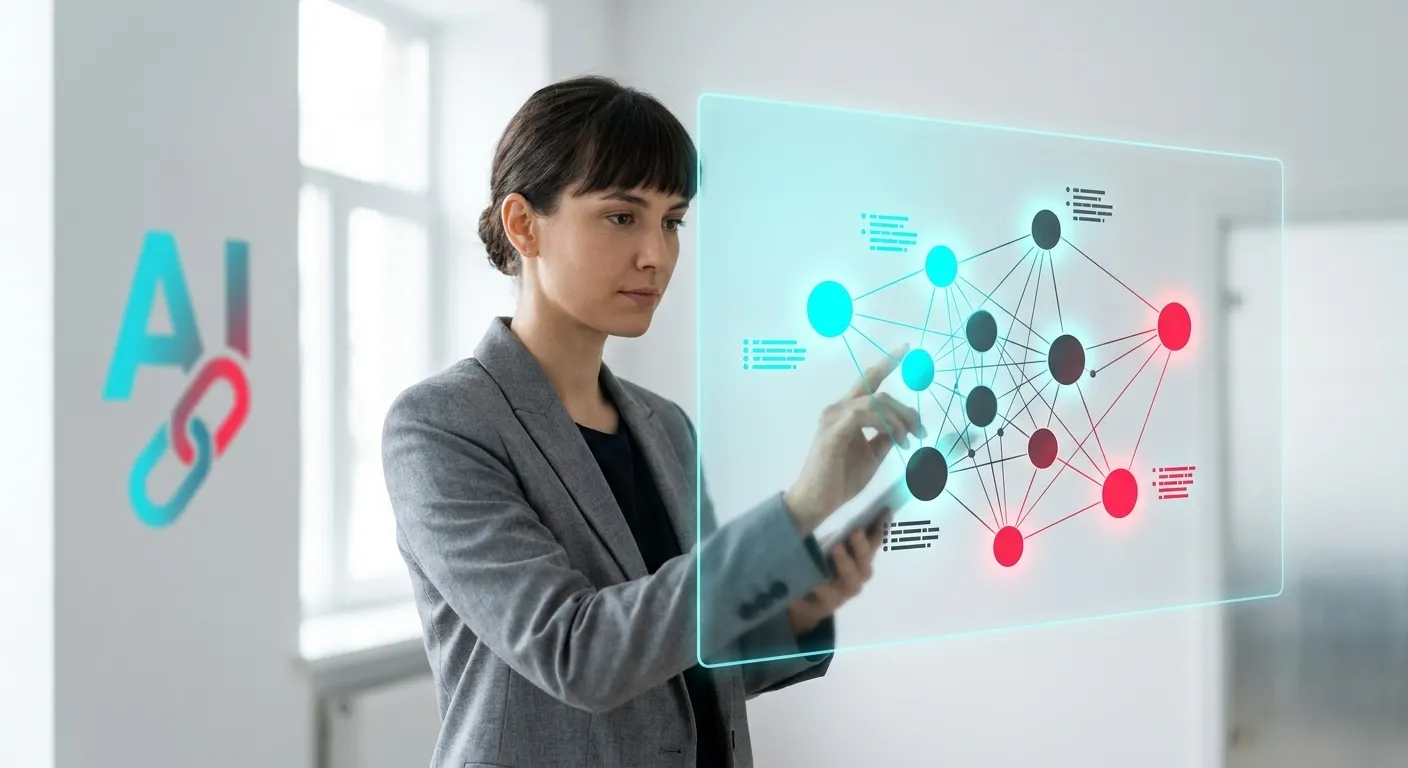
The narrative around Web3 is rapidly evolving from speculative asset trading to a focus on tangible utility and real-world applications. At the core of this transformation lies AI blockchain innovation, a powerful synergy that is building more intelligent, efficient, and user-centric decentralized systems. TrueCryptoNews delves into how artificial intelligence is acting as a catalyst, pushing blockchain technology beyond its initial confines and cementing its role as a foundational layer for the next generation of the internet. This isn’t just about faster transactions; it’s about smarter, more adaptive, and genuinely useful decentralized services.
From Speculation to Utility: The AI Blockchain Innovation Catalyst
For years, much of the crypto market’s attention centered on price movements and token launches. However, the period of 2025-2026 has witnessed a significant shift, with AI playing a critical role in driving practical applications. Consequently, the focus has moved towards genuine problem-solving capabilities.
Enhanced Data Processing and Scalability
Traditional blockchains often struggle with processing vast amounts of data efficiently, a bottleneck for complex applications. AI, particularly machine learning models, can optimize data storage, retrieval, and processing on decentralized networks. This not only improves scalability but also enables more sophisticated operations within dApps, making them capable of handling enterprise-level demands. For instance, AI-driven sharding algorithms can dynamically allocate network resources, significantly boosting throughput. Furthermore, these advancements are crucial for the continued growth of decentralized applications.
Intelligent Automation of Decentralized Services
AI is enabling a new class of automated services on the blockchain. Imagine decentralized autonomous organizations (DAOs) where AI agents manage treasury funds, vote on proposals, or even execute complex operational tasks based on predefined parameters and real-time market data. This level of intelligent automation reduces human error, increases operational efficiency, and fosters truly autonomous systems. In addition, this integration is redefining how DAOs operate and govern.
New Use Cases for Supply Chain and Identity
AI blockchain innovation is creating robust solutions for real-world problems. In supply chains, AI can analyze vast datasets from IoT sensors to predict maintenance needs or identify fraud, with all data immutably recorded on a blockchain. For digital identity, AI can enhance biometric verification and privacy-preserving data management, creating more secure and verifiable digital personas without relying on centralized authorities. Moreover, these applications demonstrate the practical benefits of this technological convergence.
Emerging AI-Powered Web3 Projects
Several cutting-edge projects are already demonstrating the profound impact of AI on the Web3 ecosystem. These initiatives are pushing the boundaries of what’s possible in decentralized environments.
Decentralized AI Networks
Projects are building decentralized networks where AI models can be trained, deployed, and monetized without central control. These platforms allow developers to access distributed computing power for AI tasks and offer data providers secure marketplaces. For more insights on this sector, explore Decentralized AI Networks: Powering Web3’s Next Evolution. Notably, this area is seeing rapid development and investment.
AI-Driven DeFi Protocols
In decentralized finance (DeFi), AI is being used to create more sophisticated trading algorithms, risk management systems, and personalized financial products. AI-powered lending protocols, for example, can assess creditworthiness more accurately using on-chain data, reducing default risks and making DeFi more accessible. Similarly, AI models can optimize liquidity provision in decentralized exchanges, improving capital efficiency. TrueCryptoNews also covers AI Impact DeFi Web3: Shaping the Future of Financial Protocols.
Enhanced Security through AI
The integration of AI also significantly bolsters the security of blockchain networks. AI algorithms can detect anomalous transactions and potential attack vectors in real-time, providing an extra layer of defense against malicious actors. This proactive security approach is vital for protecting digital assets and maintaining user trust. Furthermore, AI contributes to more resilient decentralized applications, as discussed in Securing AI dApps: Best Practices for Web3 Projects. The continuous evolution of cyber threats necessitates such advanced security measures.
The Broader Impact of AI Blockchain Innovation on Web3 Utility
The fusion of AI and blockchain is not merely about individual applications; it’s about fundamentally reshaping the entire Web3 paradigm. This integration is moving Web3 beyond its early, often theoretical, stages into a realm of practical and widespread utility. Consequently, the focus has shifted from speculative value to tangible benefits for users and enterprises alike.
Democratizing Access to AI Capabilities
One significant impact of AI blockchain innovation is the democratization of AI. By decentralizing AI model training and deployment, these innovations allow smaller entities and individuals to participate in and benefit from AI development without needing massive centralized infrastructure. This fosters a more inclusive and innovative AI ecosystem. For instance, open-source AI models can be governed by DAOs, ensuring fair access and development. In fact, this approach challenges the traditional centralized control of AI.
Creating More Intelligent and Adaptive DApps
The next generation of decentralized applications (dApps) will be inherently smarter thanks to AI. They will be able to learn from user interactions, adapt to changing market conditions, and offer highly personalized experiences. This intelligence will make dApps more intuitive, efficient, and ultimately, more appealing to a broader user base. Therefore, the user experience within Web3 is set to improve dramatically. This evolution is crucial for mainstream adoption.
Addressing Scalability and Efficiency Challenges
Scalability has long been a major hurdle for blockchain adoption. AI blockchain innovation provides novel solutions to these challenges. Machine learning can optimize consensus mechanisms, improve data compression, and intelligently manage network traffic, leading to significantly higher transaction throughput and lower costs. This makes blockchain viable for a wider range of high-volume applications. Moreover, these improvements are essential for supporting global-scale decentralized systems. Without these advancements, widespread adoption would be difficult.
Challenges and Future Directions for AI Blockchain Innovation
Despite the immense potential, the path forward for AI blockchain innovation is not without its challenges. Addressing these hurdles will be critical for realizing the full promise of this powerful synergy. Consequently, careful planning and collaborative efforts are necessary.
Interoperability and Standardization
Currently, different blockchain networks and AI platforms often operate in silos. Achieving seamless interoperability between these disparate systems is a significant challenge. Standardization of data formats, communication protocols, and AI model interfaces will be essential for creating a truly integrated Web3 ecosystem. Furthermore, this will enable more complex and interconnected applications. Without interoperability, the potential of combined technologies remains limited.
Ethical Considerations and Bias
The integration of AI into decentralized systems raises important ethical questions, particularly regarding data privacy, algorithmic bias, and accountability. Ensuring that AI models operating on blockchains are fair, transparent, and unbiased is paramount. Decentralized governance mechanisms and robust auditing processes will be necessary to address these concerns effectively. For further discussion on this topic, refer to The Future of AI in Crypto: Ethics, Evolution, and Uncharted Territory. Therefore, responsible development is a key focus.
Computational Demands and Energy Efficiency
Training and running sophisticated AI models can be computationally intensive, posing challenges for energy efficiency, especially in proof-of-work blockchain environments. Developing more energy-efficient AI algorithms and exploring alternative consensus mechanisms will be crucial. Furthermore, advancements in hardware and distributed computing will play a vital role in overcoming these limitations. Sustainable practices are increasingly important in this space.
The Role of TrueCryptoNews in Tracking AI Blockchain Innovation
TrueCryptoNews remains committed to providing timely and accurate insights into the evolving landscape of AI and blockchain. We continuously monitor emerging trends, groundbreaking projects, and significant regulatory developments that shape this intersection. Our aim is to equip our readers with the knowledge needed to understand and navigate this complex yet promising technological frontier. Consequently, our analysis helps investors make informed decisions. We believe that staying informed is key to success in this rapidly changing environment.
As AI blockchain innovation continues to mature, we expect to see an acceleration in the development of real-world applications across various sectors. From healthcare and finance to entertainment and governance, the intelligent, transparent, and secure systems enabled by this convergence will redefine how we interact with digital technologies. Therefore, the future holds immense promise for this technological synergy. This evolution represents a fundamental shift in digital infrastructure.
The synergy between artificial intelligence and blockchain technology is undeniably a driving force behind Web3’s utility revolution. By addressing critical issues like scalability, security, and intelligent automation, AI blockchain innovation is paving the way for a more efficient, equitable, and intelligent decentralized internet. We are witnessing the birth of truly adaptive and autonomous digital ecosystems. The journey from speculative assets to practical applications is well underway, and AI is its primary accelerator. This transformation promises profound societal and economic impacts.
The growth of AI in decentralized systems is a critical area for investors and technologists alike. Understanding the nuances of this integration is essential for participating effectively in the next wave of digital transformation. For example, projects leveraging AI to enhance data privacy or improve cross-chain communication demonstrate significant potential. The continuous advancements in both fields suggest a future where AI and blockchain are inextricably linked, forming the backbone of a truly intelligent and decentralized internet. TrueCryptoNews will continue to provide comprehensive coverage as this exciting field develops. We encourage our readers to explore the potential of these combined technologies.
Conclusion
The era of Web3 moving beyond mere speculation into a domain of tangible utility is here, largely powered by the relentless progress in AI blockchain innovation. This powerful combination is not just enhancing existing systems but creating entirely new paradigms for decentralized applications and services. TrueCryptoNews will continue to track these developments, ensuring our readers are always at the forefront of understanding how AI blockchain innovation is shaping the future of digital assets and the internet itself. The impact of this synergy is profound, promising a future where decentralized systems are not only robust and secure but also intelligent and highly adaptive. This transformative journey is just beginning.
FAQ
What is the primary goal of integrating AI with blockchain?
The main goal is to create more intelligent, efficient, and secure decentralized systems. This integration aims to enhance scalability, automate complex processes, and enable new real-world applications for Web3 technologies. Ultimately, it moves Web3 beyond speculation towards practical utility.
How does AI improve blockchain scalability?
AI can optimize data processing, storage, and retrieval on decentralized networks. For instance, machine learning models can enhance sharding algorithms, dynamically allocating network resources to boost transaction throughput and overall efficiency. This helps overcome one of blockchain’s long-standing limitations.
Can AI enhance security in decentralized applications?
Yes, AI significantly improves security by detecting anomalous transactions and identifying potential attack vectors in real-time. This proactive approach helps protect digital assets and ensures the integrity of decentralized systems, making them more resilient against cyber threats. For more information on securing AI dApps, consider resources like CoinDesk’s analysis of AI and blockchain.
What are some real-world applications resulting from this technological convergence?
This convergence is leading to applications in areas like intelligent supply chain management, enhanced digital identity verification, and sophisticated DeFi protocols. It also enables decentralized AI networks where models can be trained and monetized without central control. These applications demonstrate practical benefits across various industries.
What challenges need to be addressed for the widespread adoption of AI-powered decentralized systems?
Key challenges include achieving interoperability between different blockchain and AI platforms, addressing ethical concerns such as algorithmic bias, and managing the computational and energy demands of complex AI models. Overcoming these hurdles is crucial for broader adoption and impact. Additionally, standardizing protocols is vital for seamless integration, as highlighted by sources like IBM Research on AI and blockchain.