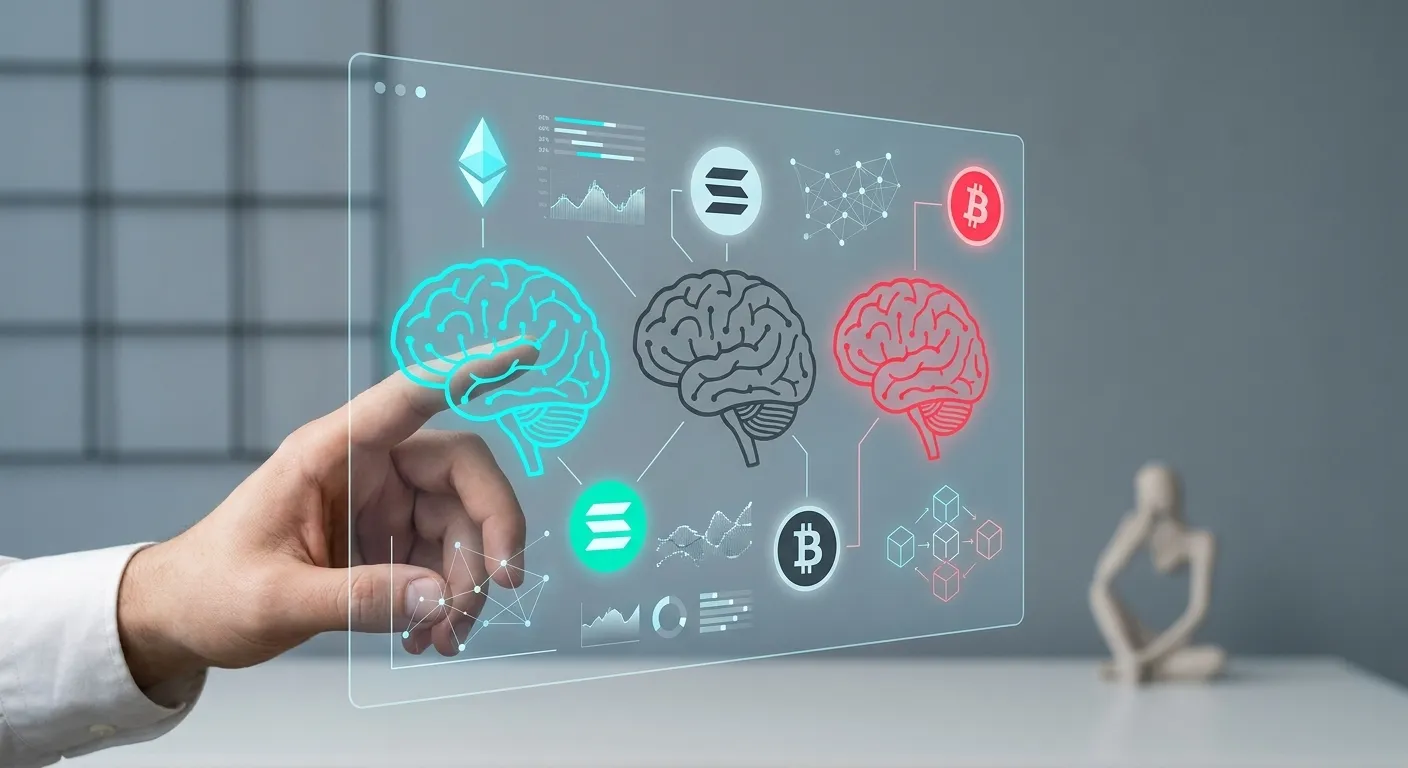
The narrative around cryptocurrencies is undergoing a profound transformation. Indeed, AI shaping crypto utility is a central force, pushing the industry past its speculative origins towards genuine functional value. For years, the crypto market has been characterized by volatility and speculative trading, often overshadowing its potential for real-world application. However, as we move through 2025 and 2026, the convergence of artificial intelligence and blockchain technology is fundamentally altering this perception. This shift is driving a significant move towards utility-driven ecosystems.
The Shift from Speculation to Utility: An AI Catalyst
The broader crypto market trend indicates a clear pivot from mere speculation to practical utility. This transition is not accidental; it is actively accelerated by the integration of artificial intelligence. AI’s capacity for complex data analysis, pattern recognition, and autonomous decision-making provides the intelligence layer necessary for blockchain networks and decentralized applications (dApps) to move beyond simple token transfers and into sophisticated, real-world use cases.
This maturation is evident in the increasing institutional interest. For instance, Bitwise predicts that ETFs will purchase more than 100% of the new supply of Bitcoin, Ethereum, and Solana in 2026. Such demand reflects a market that values underlying technology and utility, not just price pumps. AI’s role in this shift is to imbue crypto with the intelligence needed for practical application across various sectors, from finance to supply chain management.
Where AI Intersects with Crypto Utility
The synergy between AI and crypto is creating novel applications that enhance efficiency, security, and accessibility across the digital asset landscape. Consequently, this intersection is crucial for the evolution of the market.
DeFi Optimization
Artificial intelligence is poised to significantly optimize decentralized finance protocols. AI algorithms can analyze vast amounts of on-chain data to identify market inefficiencies, predict liquidity trends, and manage risk more effectively in lending and borrowing protocols. This leads to more stable and efficient DeFi ecosystems, offering more reliable yields and reduced impermanent loss. Furthermore, AI can personalize financial products, offering tailored investment strategies based on user risk profiles and market conditions. This makes DeFi more appealing to a broader audience. For further insights, consider exploring how AI Impact DeFi Web3: Shaping the Future of Financial Protocols.
Enhanced Security and Fraud Detection
Blockchain’s immutability is robust, but smart contracts and network vulnerabilities remain targets. AI can provide an additional layer of security by continuously monitoring blockchain networks for anomalies and potential threats, identifying malicious patterns that human auditors might miss. AI-powered smart contract auditing tools can proactively scan code for vulnerabilities before deployment. This significantly reduces the risk of exploits and enhances trust in decentralized applications. In fact, safeguarding digital assets is a critical concern, as highlighted in discussions around AI Crypto Security Risks: Safeguarding Digital Assets in a Converging Landscape.
Data Analytics & Market Prediction
Beyond basic price charts, AI excels at processing complex datasets. Machine learning models can analyze historical market data, news sentiment, social media trends, and on-chain metrics to generate highly accurate price predictions and market insights. This capability moves investors beyond traditional technical analysis, offering a more nuanced understanding of market dynamics. Such predictive power is vital for informed decision-making and contributes significantly to AI shaping crypto utility by providing an edge in volatile markets. Moreover, for those interested in advanced strategies, understanding AI Crypto Price Prediction: Beyond Traditional Technical Analysis is essential.
Decentralized AI Networks
The concept of decentralized AI networks is gaining traction. These networks allow for the collaborative training of AI models using distributed computational resources, incentivized by crypto tokens. This approach promotes transparency, reduces reliance on centralized entities, and can lead to more robust and ethical AI systems. For instance, projects are emerging that enable individuals to contribute data and computing power to train AI models, receiving crypto rewards in return. This paradigm shift underscores the growing importance of decentralized intelligence, as explored in articles like Decentralized AI Networks: Powering Web3’s Next Evolution.
Real-World Applications of AI-Enhanced Crypto
The integration of AI is not merely theoretical; it is manifesting in tangible applications across various industries. This practical implementation demonstrates the true potential of AI shaping crypto utility.
Supply Chain Management
Blockchain offers transparency and traceability for supply chains. When combined with AI, these systems become predictive and adaptive. AI algorithms can analyze supply chain data recorded on a blockchain to identify bottlenecks, predict demand fluctuations, and optimize logistics. This ensures greater efficiency, reduces fraud, and provides verifiable proof of origin for goods, from luxury items to pharmaceuticals.
Healthcare Innovation
In healthcare, AI and blockchain can revolutionize data management and patient care. Blockchain can securely store immutable patient records, while AI can analyze this anonymized data to identify disease patterns, personalize treatment plans, and accelerate drug discovery. This synergy improves data privacy and enhances the quality of medical research and diagnostics, showcasing another facet of AI shaping crypto utility.
Gaming and Metaverse
Within the burgeoning metaverse and blockchain gaming sectors, AI enhances user experiences and creates dynamic environments. AI-powered non-player characters (NPCs) can offer more intelligent interactions, while AI can generate unique in-game assets as NFTs. This creates richer, more immersive digital worlds and economies where players truly own their digital possessions. Furthermore, the integration allows for more complex economic models within these virtual spaces.
The Future Landscape: AI and Crypto Synergies
Looking ahead, the collaboration between AI and crypto is set to deepen, leading to even more sophisticated and integrated systems. This evolution will further solidify AI shaping crypto utility as a defining trend.
Autonomous Agents and dApps
AI-powered autonomous agents operating on blockchain networks could execute complex tasks without human intervention. These agents could manage portfolios, optimize resource allocation in decentralized autonomous organizations (DAOs), or even negotiate smart contracts. This represents a significant step towards truly autonomous and intelligent decentralized applications. The development of such applications requires careful consideration of security and ethical implications.
Enhanced Regulatory Compliance
As the crypto industry matures, regulatory compliance becomes increasingly important. AI can assist in this area by monitoring transactions for suspicious activity, ensuring adherence to AML (Anti-Money Laundering) and KYC (Know Your Customer) regulations, and generating audit trails. This proactive approach helps crypto projects navigate the complex legal landscape, fostering greater trust among regulators and traditional financial institutions. For more context, see discussions on AI Crypto Regulation: Navigating the Evolving Landscape.
Personalized Digital Economies
The combination of AI and blockchain can lead to highly personalized digital economies. AI will be able to tailor financial services, content delivery, and even governance proposals to individual user preferences and behaviors, all while maintaining data sovereignty through blockchain. This creates a more user-centric and efficient digital experience, fundamentally altering how individuals interact with online services and assets.
Challenges and Considerations
Despite the immense potential, the convergence of AI and crypto is not without its challenges. Addressing these issues is crucial for successful widespread adoption and for AI shaping crypto utility effectively.
Scalability and Interoperability
Many blockchain networks still face scalability limitations, which can hinder the performance of AI-intensive applications. Furthermore, ensuring interoperability between different blockchain networks and AI models is essential for seamless data flow and collaboration. Solutions like layer-2 scaling and cross-chain bridges are being developed to address these issues, but continued progress is necessary.
Data Privacy and Security
While blockchain offers inherent security, the integration of AI introduces new considerations regarding data privacy and the security of AI models themselves. Protecting sensitive data used for AI training and preventing adversarial attacks on AI algorithms are critical. Robust encryption and privacy-preserving AI techniques are vital for maintaining user trust.
Ethical AI and Decentralized Governance
The development of autonomous AI systems on decentralized networks raises important ethical questions. Ensuring that AI operates fairly, transparently, and aligns with human values requires careful design and robust decentralized governance mechanisms. Community participation in decision-making processes regarding AI protocols will be increasingly important.
Conclusion
The narrative of cryptocurrency is indeed evolving, moving decisively beyond mere speculation. AI shaping crypto utility is not just a trend; it is a fundamental reorientation of the industry towards tangible, real-world value. From optimizing DeFi to enhancing security, predicting markets, and powering decentralized AI networks, the synergy between artificial intelligence and blockchain technology is creating a new paradigm for digital assets. As we progress, this integration promises to unlock unprecedented efficiencies, foster innovation across numerous sectors, and ultimately build a more intelligent, secure, and useful decentralized future. Investors and innovators alike must recognize that the future of digital assets lies in their practical application, driven by the transformative power of AI.
FAQ
How does AI enhance cryptocurrency applications?
AI enhances crypto applications by enabling more sophisticated data analysis, improving security through fraud detection, optimizing decentralized finance protocols for better efficiency, and providing advanced market predictions. This moves cryptocurrencies beyond just trading into practical, functional uses.
What are some real-world examples of AI and blockchain working together?
Real-world examples include AI optimizing supply chain management for transparency and efficiency, enhancing healthcare by securely managing patient data and accelerating research, and creating more dynamic and immersive experiences in blockchain gaming and the metaverse.
Will artificial intelligence make crypto more secure?
Yes, AI can significantly improve crypto security. It does this by continuously monitoring blockchain networks for anomalies, identifying potential threats, and proactively auditing smart contracts for vulnerabilities before deployment. This adds a crucial layer of protection.
How does AI influence the shift from crypto speculation to utility?
AI influences this shift by providing the intelligence layer necessary for blockchain networks and dApps to move into sophisticated, real-world use cases. Its capacity for complex data analysis and autonomous decision-making transforms speculative assets into functional tools across various industries.
What are the main challenges in combining AI and blockchain?
Key challenges include ensuring scalability of blockchain networks for AI-intensive applications, addressing interoperability issues between different systems, maintaining robust data privacy and security for AI models, and establishing ethical guidelines for decentralized AI governance.