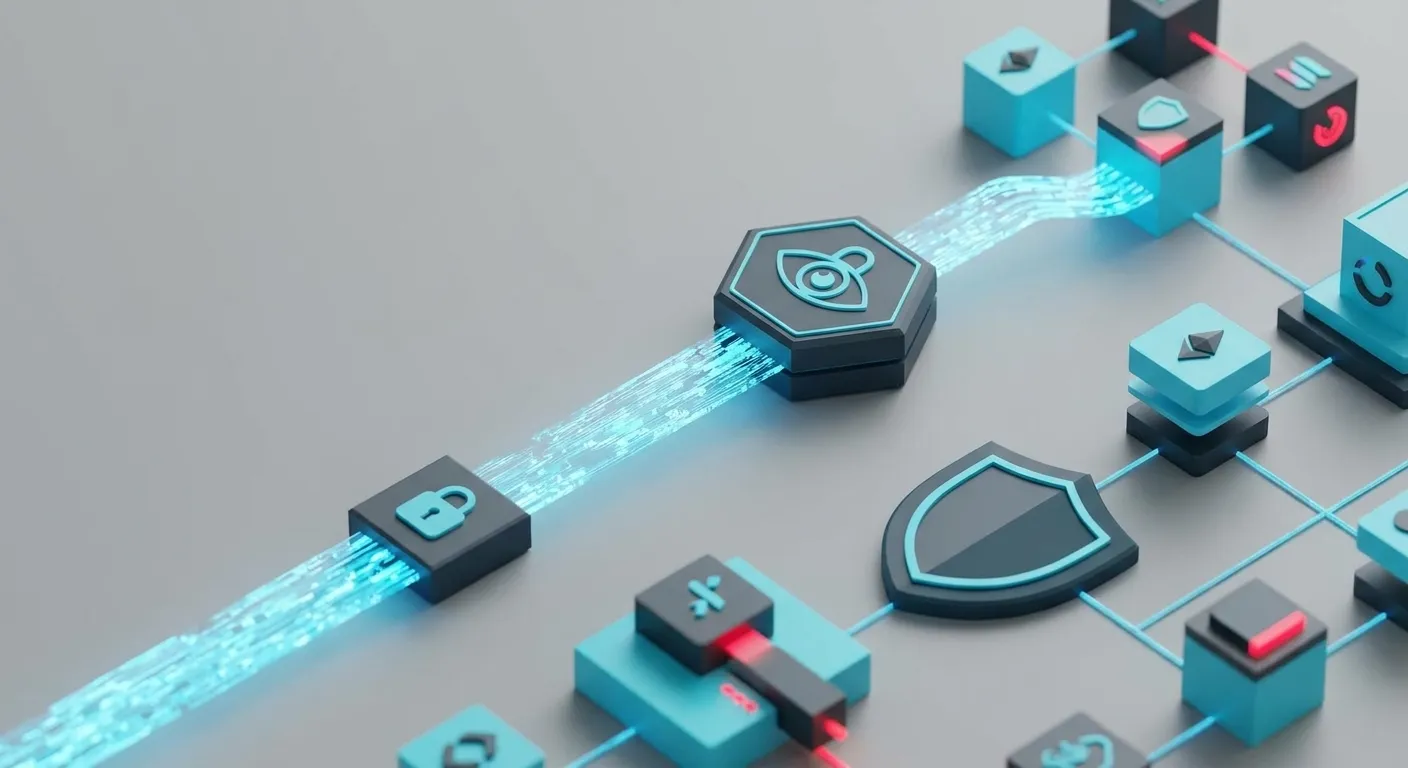
In the rapidly expanding world of Decentralized Finance (DeFi), smart contracts automate agreements and execute transactions based on predefined conditions. However, a fundamental limitation arises: smart contracts residing on a blockchain cannot directly access real-world data outside their network. This is where blockchain oracles become indispensable. Oracles DeFi Security is paramount, as these critical middleware components act as bridges, feeding external information into smart contracts, enabling them to react to events like price fluctuations, election results, or weather conditions. Without reliable and secure oracles, the utility and integrity of most DeFi applications would be severely compromised. Consequently, understanding how these systems function and how they are protected is vital for anyone engaging with the DeFi ecosystem.
The Indispensable Role of Blockchain Oracles in DeFi
Blockchain oracles serve as a crucial link between the deterministic world of blockchain and the dynamic, data-rich external world. Essentially, they are data feeds that bring off-chain information onto the blockchain. For instance, a lending protocol might need to know the current market price of ETH to determine collateral ratios. A prediction market might require the outcome of a real-world event, such as a sports match or an election. Oracles facilitate these interactions. Furthermore, they can also push data from the blockchain to off-chain systems, enabling hybrid smart contracts that combine the transparency and immutability of blockchain with the flexibility of traditional applications.
The types of data oracles can provide are vast, ranging from asset prices and interest rates to identity verification and supply chain logistics. Moreover, they can be categorized based on their data source (software oracles, hardware oracles), direction of data (inbound, outbound), and trust model (centralized, decentralized). The integrity of the data provided by these systems directly impacts the reliability and trustworthiness of the DeFi protocols they serve. Therefore, robust mechanisms for ensuring data accuracy and tamper-resistance are fundamental to the entire decentralized finance landscape.
Ensuring Oracles DeFi Security and Reliability
The integrity of Oracles DeFi Security rests on their ability to provide accurate, tamper-proof, and continuously available data feeds. A compromised oracle could lead to devastating financial losses, as smart contracts would execute based on false information. To mitigate this, robust oracle solutions employ several security measures. Decentralization is key: instead of a single point of failure, multiple independent data providers aggregate information, cross-verify it, and sign off on its validity. Reputation systems, economic incentives (staking), and cryptographic proofs (like zero-knowledge proofs) further enhance trust. Leading oracle networks, such as Chainlink, have pioneered these multi-layered approaches to deliver highly reliable and secure data to DeFi protocols. These measures collectively aim to minimize the risk of malicious attacks or data manipulation.
A notable aspect of ensuring oracle reliability involves the aggregation of data from numerous sources. For example, instead of relying on a single exchange for a crypto asset’s price, a decentralized oracle network (DON) will gather data from multiple exchanges. This diverse input then undergoes a process of validation and aggregation, often using median or weighted average calculations, to produce a robust and resilient data point. Consequently, this method significantly reduces the impact of a single compromised data source or an isolated market anomaly.
Common Oracle Attack Vectors and Protections
Understanding common attack vectors is crucial for bolstering Oracles DeFi Security. Price manipulation is a significant risk, where an attacker might artificially inflate or deflate an asset’s price on an exchange to trigger a smart contract’s liquidation or arbitrage opportunity. Data poisoning, where malicious actors feed incorrect data, is another threat. Protections against these include using time-weighted average prices (TWAPs) from multiple sources, implementing circuit breakers to halt operations during extreme volatility, and utilizing decentralized oracle networks (DONs) that aggregate data from numerous independent nodes. As DeFi continues to mature, the sophistication of oracle solutions will be a deciding factor in the overall resilience and trustworthiness of the ecosystem. Safeguarding digital assets in this converging landscape is a top priority, as discussed in our article on AI Crypto Security Risks: Safeguarding Digital Assets in a Converging Landscape.
Another potential vulnerability involves flash loan attacks, which can be used to temporarily manipulate asset prices on a single exchange, thereby tricking an oracle into providing a false price feed. To counter this, many oracle solutions incorporate mechanisms that delay data updates or require multiple confirmations before data is considered final. Furthermore, the use of off-chain reporting, where data providers sign data off-chain and only submit aggregated, validated data on-chain, reduces gas costs and increases efficiency while maintaining security. This method is particularly effective for high-frequency data updates.
Decentralized Oracle Networks (DONs): The Gold Standard for Oracle Security
Decentralized Oracle Networks (DONs) represent the most advanced and secure approach to oracle services. Unlike centralized oracles, which present a single point of failure, DONs distribute the responsibility of data provision across a multitude of independent nodes. Each node in a DON sources data, validates it against other nodes’ data, and then submits it to a smart contract. This distributed architecture inherently enhances Oracles DeFi Security by making it significantly harder for any single entity to compromise the data feed. Moreover, these networks often employ cryptographic proofs to verify the authenticity and integrity of the data, providing an auditable trail.
The economic incentives within DONs further strengthen their security. Node operators typically stake a certain amount of cryptocurrency as collateral. If a node provides inaccurate or malicious data, its staked collateral can be slashed, providing a strong deterrent against misbehavior. Conversely, honest node operators are rewarded for their reliable service, creating a robust and self-sustaining ecosystem. This blend of cryptographic assurances and economic incentives forms a powerful defense against various attack vectors, ensuring the reliability of data crucial for DeFi applications. This robust infrastructure is essential for the future of finance, especially as AI continues to shape financial protocols, a topic explored in AI Impact DeFi Web3: Shaping the Future of Financial Protocols.
The Future of Oracle Security in a Maturing DeFi Landscape
As the DeFi ecosystem continues its rapid expansion, the sophistication of oracle security measures must evolve in tandem. New attack vectors may emerge, requiring continuous innovation in defense strategies. For instance, the integration of advanced AI and machine learning techniques into oracle networks could enhance their ability to detect anomalies and predict potential manipulation attempts. AI-powered analytics can process vast amounts of market data in real-time, identifying unusual patterns that might indicate an attack. This proactive approach could significantly bolster the resilience of oracle services against novel threats.
Furthermore, the development of cross-chain oracles will become increasingly important as DeFi expands beyond single blockchain ecosystems. Ensuring secure and reliable data transfer between different blockchains presents unique challenges that oracle providers are actively addressing. The ability of smart contracts on one chain to securely access data from another chain, or from multiple external sources, will unlock new possibilities for interconnected and highly functional decentralized applications. This advancement is crucial for the overall interoperability and scalability of the decentralized financial world. The robust security of these systems is a critical component for safeguarding decentralized applications, as highlighted in Securing AI dApps: Best Practices for Web3 Projects.
The role of oracle providers extends beyond merely delivering data; they are increasingly involved in developing comprehensive risk management frameworks for DeFi protocols. This includes providing tools and services that allow protocols to configure their oracle feeds with specific security parameters, such as deviation thresholds, update frequencies, and fallback mechanisms. Such customizable security features enable DeFi projects to tailor their oracle integration to their specific risk profiles and operational requirements, thereby enhancing overall system integrity. The ongoing research and development in this area are vital for the long-term viability of decentralized finance.
The regulatory landscape also plays a role in shaping oracle security. As governments and financial bodies begin to consider how to regulate decentralized finance, the integrity and transparency of data feeds provided by oracles will likely come under scrutiny. Establishing clear standards and best practices for oracle design and operation could help foster greater trust and adoption of DeFi applications among institutional investors and traditional financial entities. This evolving regulatory environment, particularly concerning AI and crypto, is a significant area of focus for the industry, as detailed in Regulating AI Crypto: Navigating the Evolving Legal Landscape.
The Importance of Audits and Community Oversight
Regular security audits are an indispensable part of maintaining strong Oracles DeFi Security. Independent third-party auditors rigorously examine the code and architecture of oracle networks to identify vulnerabilities and potential exploits. These audits help to ensure that the oracle solutions adhere to the highest security standards and best practices. Furthermore, transparent audit reports build confidence within the DeFi community, demonstrating a commitment to security and reliability. Without thorough auditing, even the most well-designed oracle system could harbor hidden weaknesses that attackers might exploit.
Community oversight also plays a vital role. Open-source oracle protocols benefit from the collective intelligence of developers and security researchers worldwide. This collaborative approach allows for continuous peer review and rapid identification of issues. Bug bounty programs, where security researchers are rewarded for discovering and reporting vulnerabilities, further incentivize community participation in enhancing oracle security. This decentralized approach to security, mirroring the decentralized nature of DeFi itself, creates a resilient and adaptive defense mechanism against evolving threats. The collective effort ensures continuous improvement in the robustness of oracle services.
In conclusion, oracles are the unsung heroes of DeFi, enabling smart contracts to interact with the real world. Their security is non-negotiable for the sustained growth and trustworthiness of the entire decentralized financial landscape. The continuous innovation in decentralized oracle networks, coupled with robust security practices and community oversight, is crucial for safeguarding the integrity of data that powers the future of finance. As DeFi continues to mature, strong Oracles DeFi Security will remain a cornerstone of its success, protecting users and fostering innovation in this transformative industry.
FAQ
What is a blockchain oracle?
A blockchain oracle is a third-party service that connects smart contracts to real-world data and systems outside the blockchain. It acts as a bridge, feeding external information, such as market prices, weather data, or event outcomes, into smart contracts, enabling them to execute based on conditions that exist off-chain.
Why are secure data feeds important for decentralized finance?
Secure data feeds are critical for decentralized finance because smart contracts rely on accurate and tamper-proof external information to function correctly. If these feeds are compromised, smart contracts could execute incorrectly, leading to significant financial losses, liquidations, or other detrimental outcomes for users and protocols.
How do decentralized oracle networks enhance security?
Decentralized oracle networks (DONs) enhance security by distributing data provision across multiple independent nodes instead of relying on a single source. This decentralization makes it much harder for any single entity to manipulate data. They often use data aggregation, cryptographic proofs, and economic incentives like staking to ensure accuracy and deter malicious behavior.
What are common threats to oracle systems?
Common threats to oracle systems include price manipulation, where attackers try to feed false asset prices to smart contracts, and data poisoning, where malicious actors inject incorrect or misleading information. Flash loan attacks can also be used to temporarily manipulate market data, making robust protection mechanisms essential.
What measures are taken to protect oracle systems?
Protections for oracle systems include decentralization (using multiple data providers), data aggregation from numerous sources, economic incentives (staking and slashing), cryptographic proofs, time-weighted average prices (TWAPs), circuit breakers, and continuous security audits. These measures collectively aim to ensure data integrity and prevent manipulation.
How does AI contribute to the future safety of data feeds?
AI can contribute to the future safety of data feeds by enhancing anomaly detection and predictive capabilities. Machine learning algorithms can analyze vast amounts of real-time market data to identify unusual patterns that might indicate manipulation attempts or potential vulnerabilities, enabling proactive defense against emerging threats to data feed integrity.